The starting point for this edition is a VHS tape from the IMAI archive containing three video works made in the mid-1980s. The tape was labeled simply “Touristinnen,” so it was not initially apparent that the works were by three different artists. Extensive research revealed that the works are by Claudia Richarz, Nina Rippel, and Ulrike Zimmermann. All three lived in Hamburg in the 1980s, were part of the highly active queer-feminist video scene at the time, and supported one another in their projects.
Guests: Claudia Richarz, Nina Rippel, Ulrike Zimmermann
Film program with English subtitles
Discussion in German
PROGRAM
Nina Rippel, Three Underwater Pieces with Cello, 1985, 16 mm (digitized), 6 min., sound
Nina Rippel, Under Horizon, 1988, 16 mm (digitized), 9 min., sound
Claudia Richarz, Finally a Princess, 1985, 16 mm (digitized), 2 min., sound
Claudia Richarz, I Walk Among Flowers, 1985, 16 mm (digitized), 3 min., sound
Claudia Richarz, Vacuuming, 1985, 16 mm (digitized), 6 min., sound
Claudia Richarz, The Number Girl, 1989, 16 mm (digitized), 1 min., silent
Ulrike Zimmermann, Tourists – Above and Below Water, 1986, U-Matic (digitized), 22 min., sound
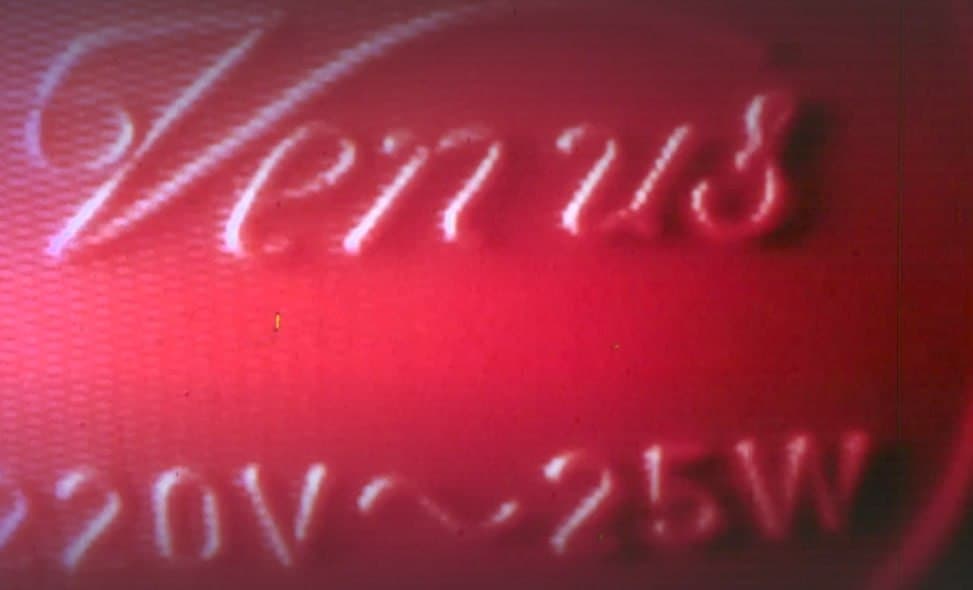
Ulrike Zimmermann, Venus 220 Volts – Pleasure in the Household, 1991, 16 mm (digitized), 10 min., sound, (co-production with Pipilotti Rist)
Claudia Richarz (*1955 in Troisdorf, lives in Eckernförde) is an experimental and documentary filmmaker. She studied visual communication at the University of Fine Arts Hamburg, including with Helke Sander. In 1979, Richarz co-founded bildwechsel, a cultural and media center for women. Several of her films have received awards, including the 2000 documentary series Losing Weight in Essen, which received the Grimme Award, and Helke Sander: Aufräumen, which received the Audience Award at the Internationalen Frauen Film Fest Dortmund+Köln in 2023.
Nina Rippel (lives in Hamburg) is an experimental and documentary filmmaker. She studied art education and film at the University of Fine Arts Hamburg. In 1980, she founded the documentary filmmakers’ collective die thede there. She worked as an art educator at various high schools and taught media as a lecturer at the University of Applied Sciences in Frankfurt am Main and at Leuphana University Lüneburg. Her films explore perception and the embodied dimension of film. Her subjects range from filming underwater to the experience of the world by people with visual impairments.
Ulrike Zimmermann (*1969 in Hamburg, lives in Berlin) is a filmmaker and producer of cross-media online formats. She studied film at the University of Fine Arts Hamburg. In 1989, she founded the production company MMM Film, with which she produced numerous narrative and documentary films for international cinema. For decades, her work has revolved around the question of the future of the visualization of sexuality. In 2014, she participated in the 64th Berlinale with the film Vulva 3.0.
Collaborative Assemblages is a four-part series of film evenings featuring experimental films that traces different facets of feminist, collaborative working practices in the 1970s and 1980s—working practices that were essential to women* working in experimental film. The episodes focus on the experimental film scenes in the cities of Vienna, Hamburg, and Berlin.
Collaborative Assemblages focuses on networks of practices that enabled women* to participate in the experimental film scenes of the 1980s with greater confidence and expertise and—most importantly—in ever-growing numbers. These included various initiatives, collectives, and official as well as informal groups. The exchange of knowledge about technology, filmmaking methods, and aesthetic forms, as well as access to equipment, were essential concerns. But it was also about motivating one another and helping each other with filmmaking. The initiatives also provided a platform for (queer-)feminist activism and self-determined cultural production.
These often friendship-based collaborative assemblages took no uniform form and ranged from spontaneous alliances to more highly organized structures. They appeared, for example, as homemade instruction manuals for using a particular camera, the shared use of equipment, supportive conversations, collaborative film projects, or film workshops. In their diverse forms, they helped deconstruct the field of experimental film and open up new spaces for women* to engage and participate. The individual assemblages existed for varying lengths of time, and only a few documented their own activities. In most cases, they have been passed down only orally by people who witnessed them firsthand, pointing to the fragility of this knowledge.
In four film evenings, a selection of experimental films and videos created within such collaborative assemblages will be presented. The examples come from Vienna, Hamburg, and Berlin. Each evening is dedicated to one city and accompanied by discussions with the filmmakers.
The series is a collaboration between Künstlerhaus Bethanien and attaque[e]r le visible and is curated by Lawinia Rate.
The event is funded by Bezirksamt Friedrichshain-Kreuzberg.