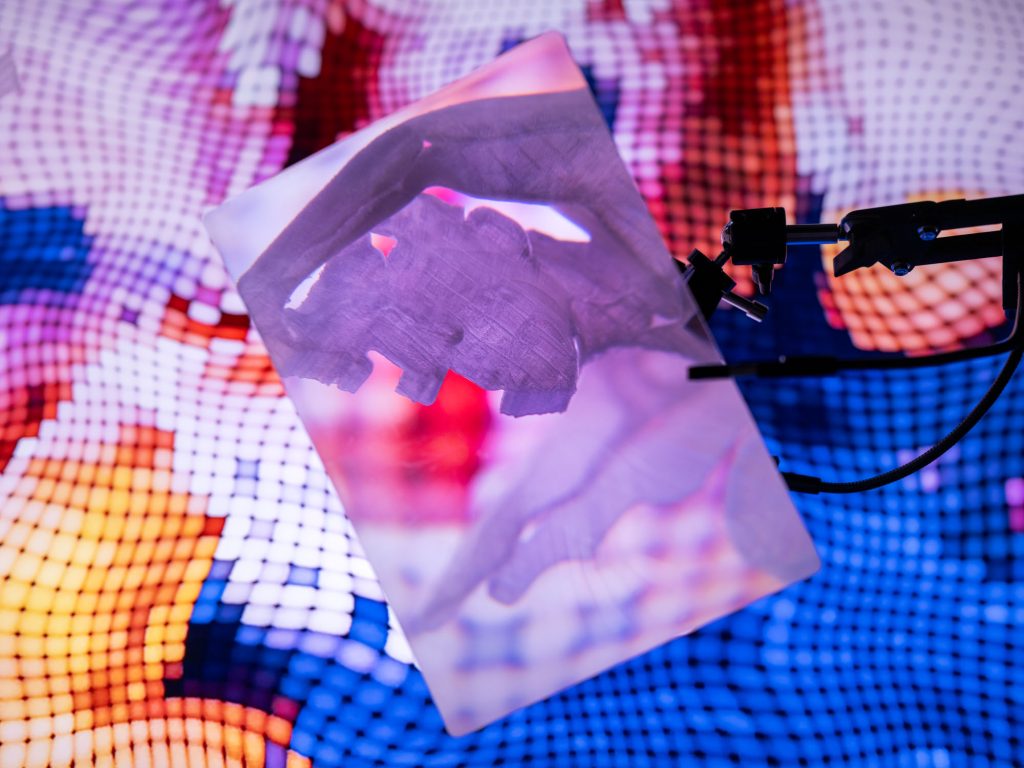
Francisco González-Rosas (he/they) is a performance and new media artist whose practice explores critical and speculative entanglements between body and technology from a postcolonial perspective. Inspired by internet culture, social interfaces and the surfeit of imagery and representation of the self that exists within digital networks, Francisco delves into image-making as a key aspect of contemporary society. Employing performance, video, installation, generative and digital media, they enquire into the way technology and networked media produce subjectivities and influence social, economic and aesthetic relations.
Francisco Gonzalez-Rosas’ work is framed within a conceptual practice called hyper-self-mediation, a studio making strategy that challenges normative approaches to self-representation. Rather than pursuing naturalistic depictions, hyper-self-mediation conveys depersonalized forms of self-imaging, abstracting the body from its physical form and emphasizing the technical interfaces involved, underscoring historical and cultural configurations embedded in technology and media. The merging of digital and physical worlds explored through a decolonial lens emerges within a larger contemporary discourse, of which Legacy Russell’s “Glitch Feminism” is paradigmatic. Within this framework, the glitched body acts as a token that signifies computational operations —along with the ideological, ethical, and material reverberations of these processes.