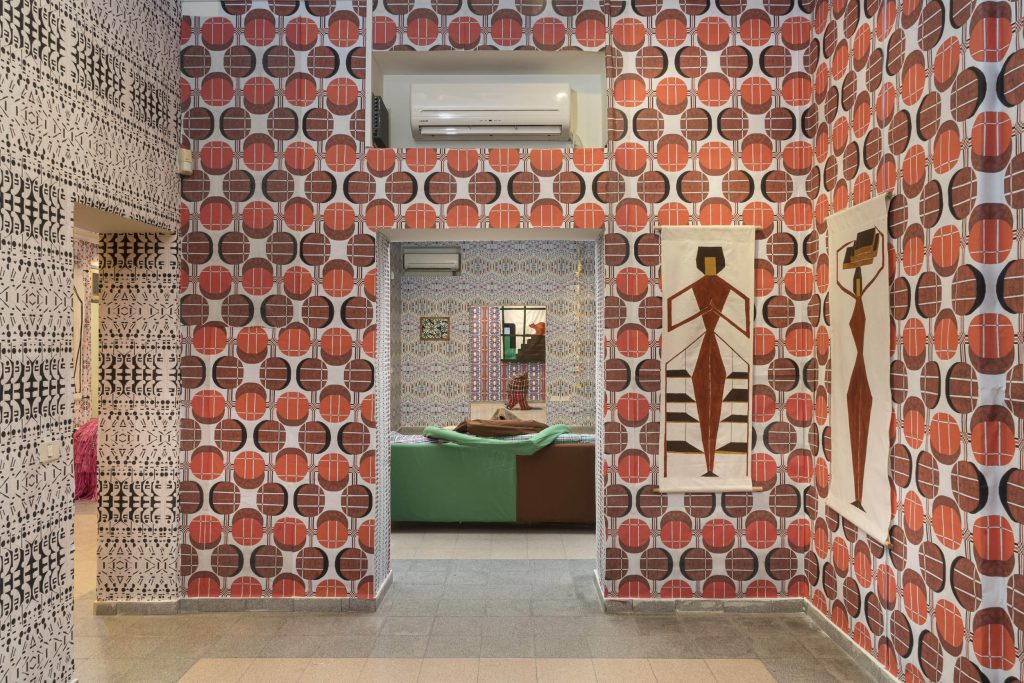
Ruti de Vries’s practice is like an ever-expanding spiral, incessantly gathering new motives and materials to form an enigmatic mythology that keeps haunting her works, drawing equally from ancient art, as from the worlds of fashion and theater.
Working quickly and intuitively, oscillating between obsessive laboring and immediate expressiveness, her works are made from various materials. They usually offer only a shell of a structure, an eviscerated presence. These bric-à-brac taxidermies populate stage-like environments, where time seems to have freezed just in the midst of things, leaving us with a silent choreography of suspended gestures and charged feelings.
In these fragmented yet meticulously constructed limbos, distinctions between human and animal, masculine and feminine, organic and artificial, dissolve. De Vries’s versatile practice — which moves naturally from sewing to computer animation — in terms of channels of action, each with its own rhythm and inner logic. Through the use of different crafts, she explores issues of gender, labor, and creative hierarchies, as well as the cultural structures of kitsch and melodrama. Ornamentation, patterns and symmetry, all highly characteristic of craft, take center stage, and contribute to a constant tension between two-dimensionality and volume, the graphic and the sculptural, sign and presence.