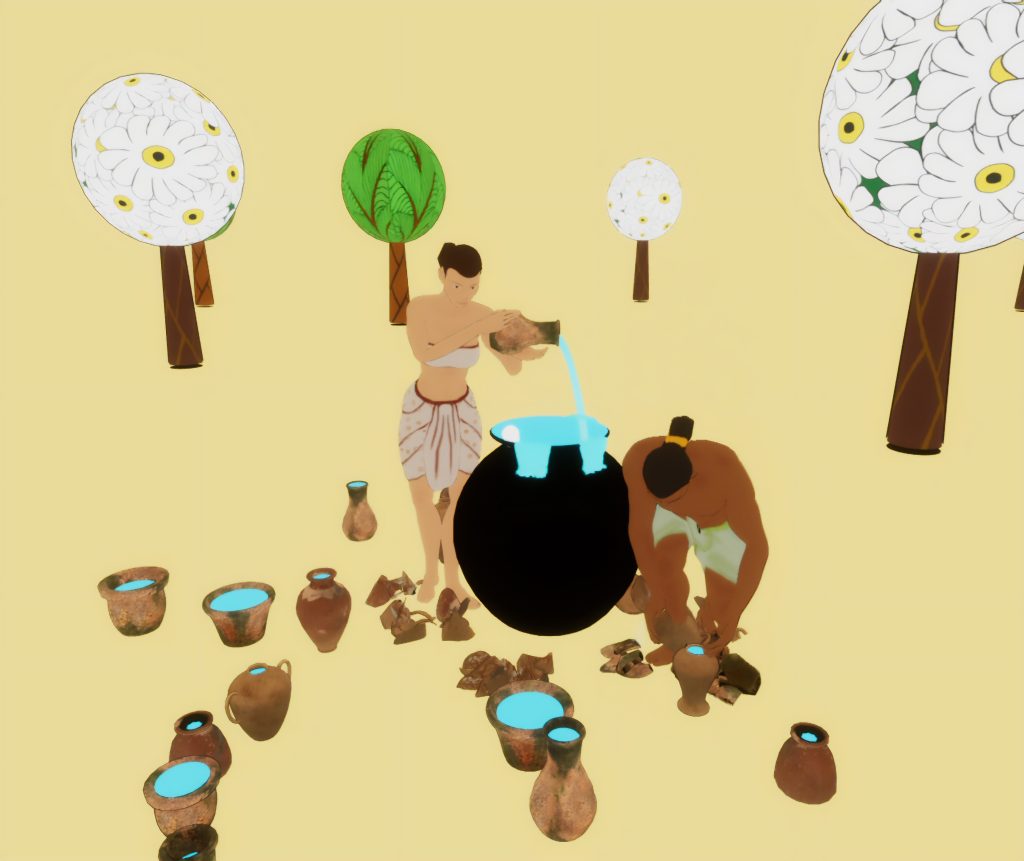
The exhibition 16 Dreams of Me introduces a multilayered, dreamlike space in which personal memory, collective trauma, and political reality are inextricably intertwined. Dream is presented not as a retreat, but as a state of confrontation—a space in which inner images, social conditioning, and political violence converge.
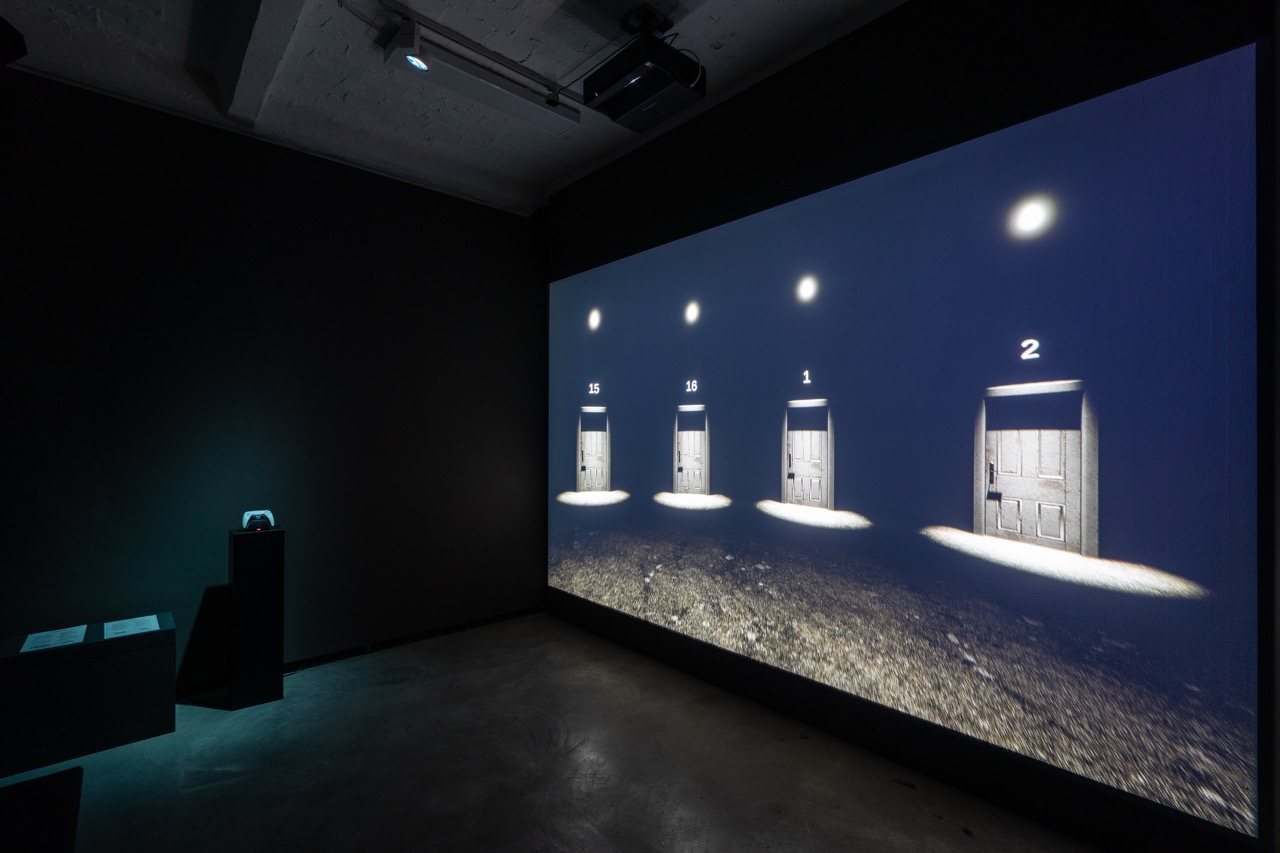
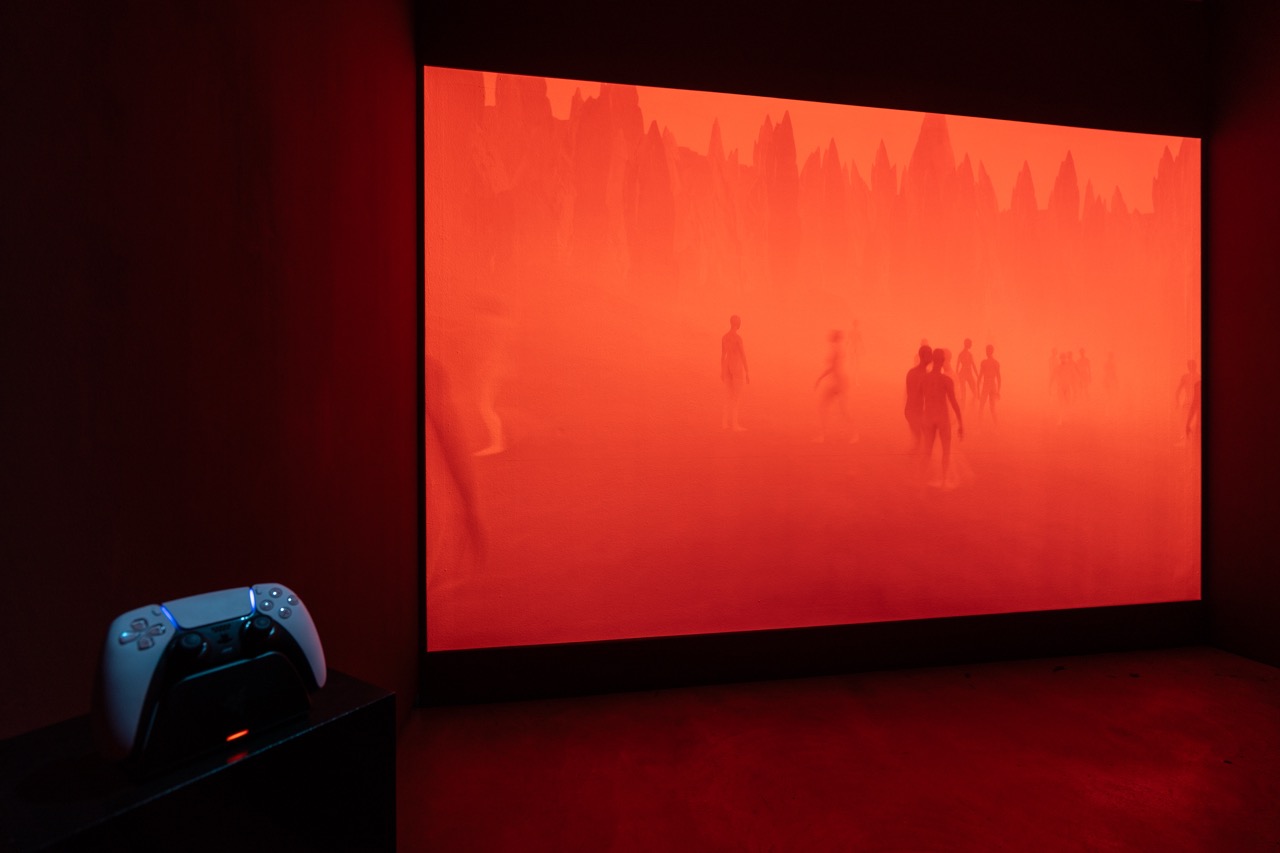
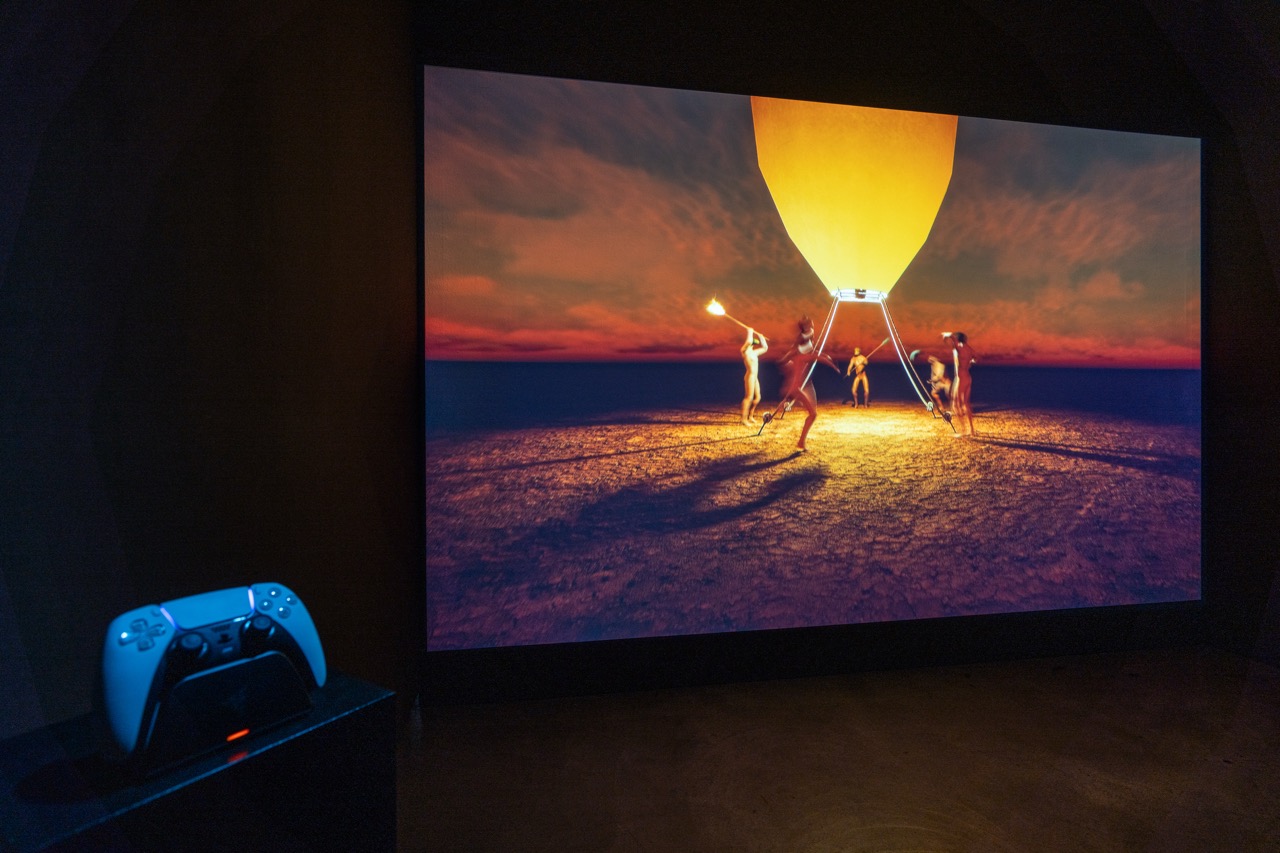
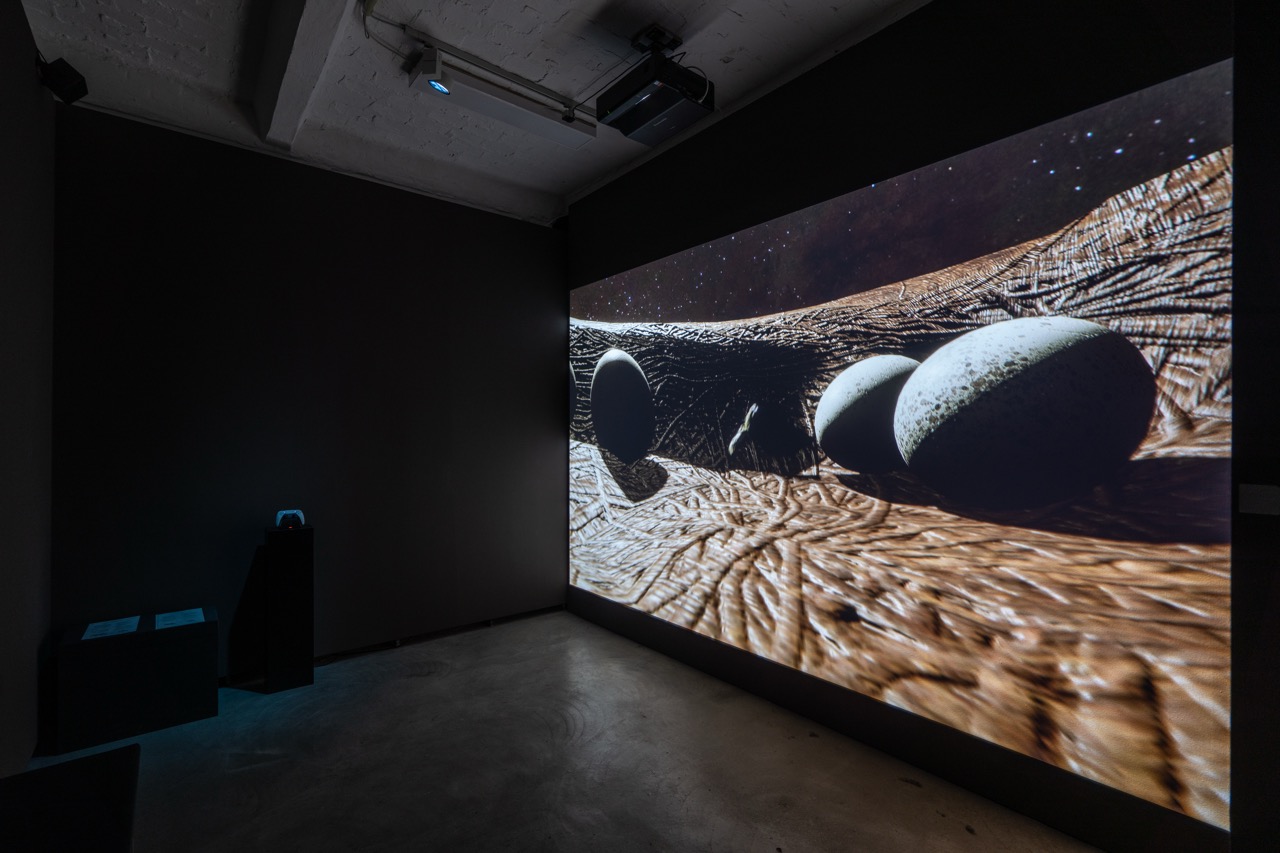
The interactive installation 16 Dreams of Me, which shares the exhibition’s title, lies at the heart of the exhibition. Visitors are able to control the video sequences using a regular video game controller. Through various portals, they enter sixteen different dream scenarios that can be freely explored, some even allowing direct interaction with the virtual environment. Decisions open new pathways, yet may also also lead back into repetitions, detours, or dead ends, rendering tangible the contraints of agency within overarching systems—even where freedom is suggested.
Lukhar reinterprets Southeast Asian mythology, particularly the sixteen dreams of King Pasenadi, through a contemporary digital visual language, offering a personal perspective that bridges allegory and present-day reality. The mythological motifs operate less as illustrations than as a structural framework for contemplating contemporary conditions of control, moral ambivalence, and political violence. Allegory and reality interlace, resisting simple resolution.
The dreams become spaces of questioning and silent resistance. Surreal sequences feature, among other things, fish endlessly circulating through closed pipe systems, beings with devoid of senses, fragmented self-images, and ritualized acts of repetition and destruction. These images allude to discipline, conformity, and the gradual normalization of violence, without explicitly naming them.
The work stems from a quiet, inner unease; an awareness that thinking, silence, and the understanding of suffering are profoundly influenced by religious, social, and political systems. Through its interactive structure, the work shifts responsibility and agency onto the visitors, allows them to experience how orientation, decision, and powerlessness are intertwined, and affect one another.
Lukhar’s personal experiences stand as a representation of an entire generation in Myanmar which lives under military rule, structural violence, and ongoing civil war. 16 Dreams of Me deliberately avoids clear answers or linear narrative closure. Instead, the exhibition invites visitors to endure uncertainty and reflect on how power inscribes itself into the body and consciousness, how traumas silently repeat themselves, and how imagination, even in the midst of violence, can enable a fragile yet effective form of resistance.