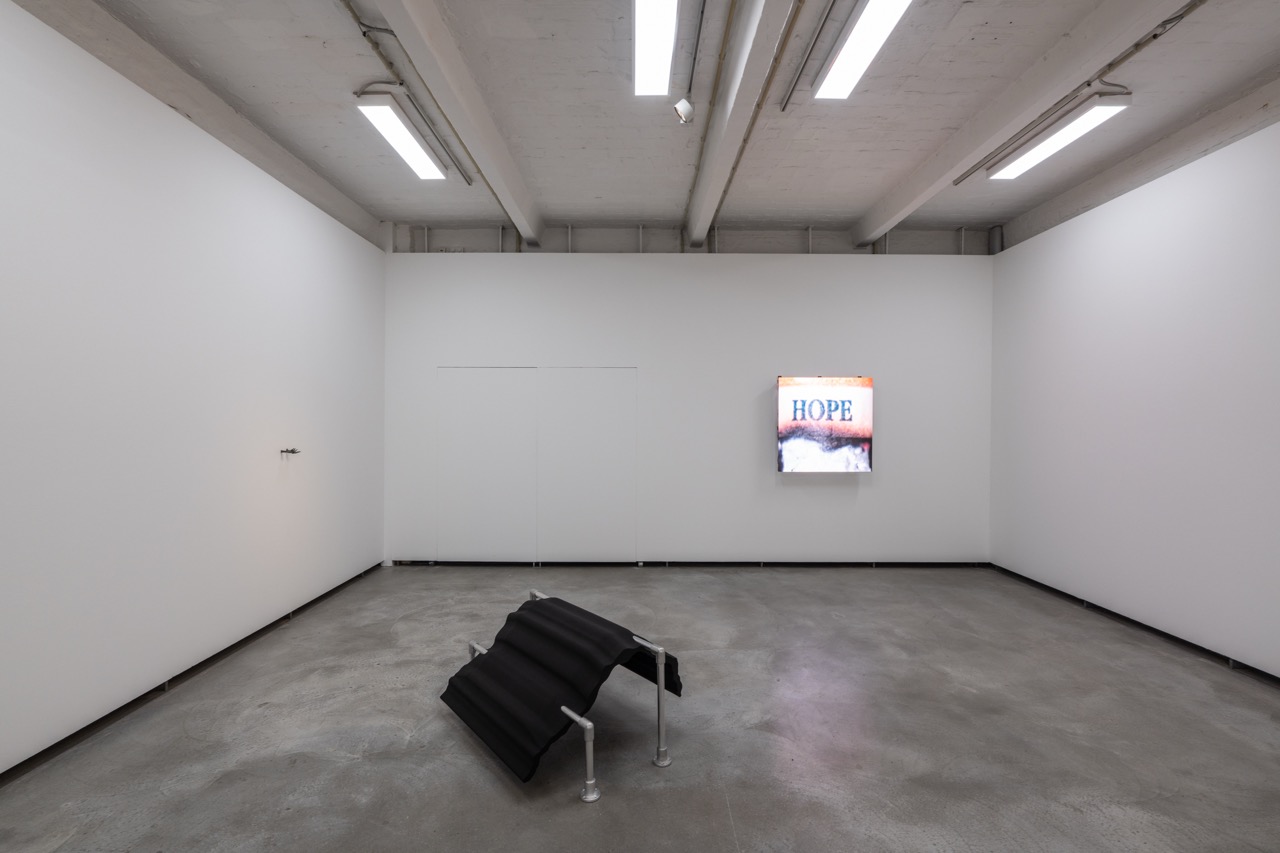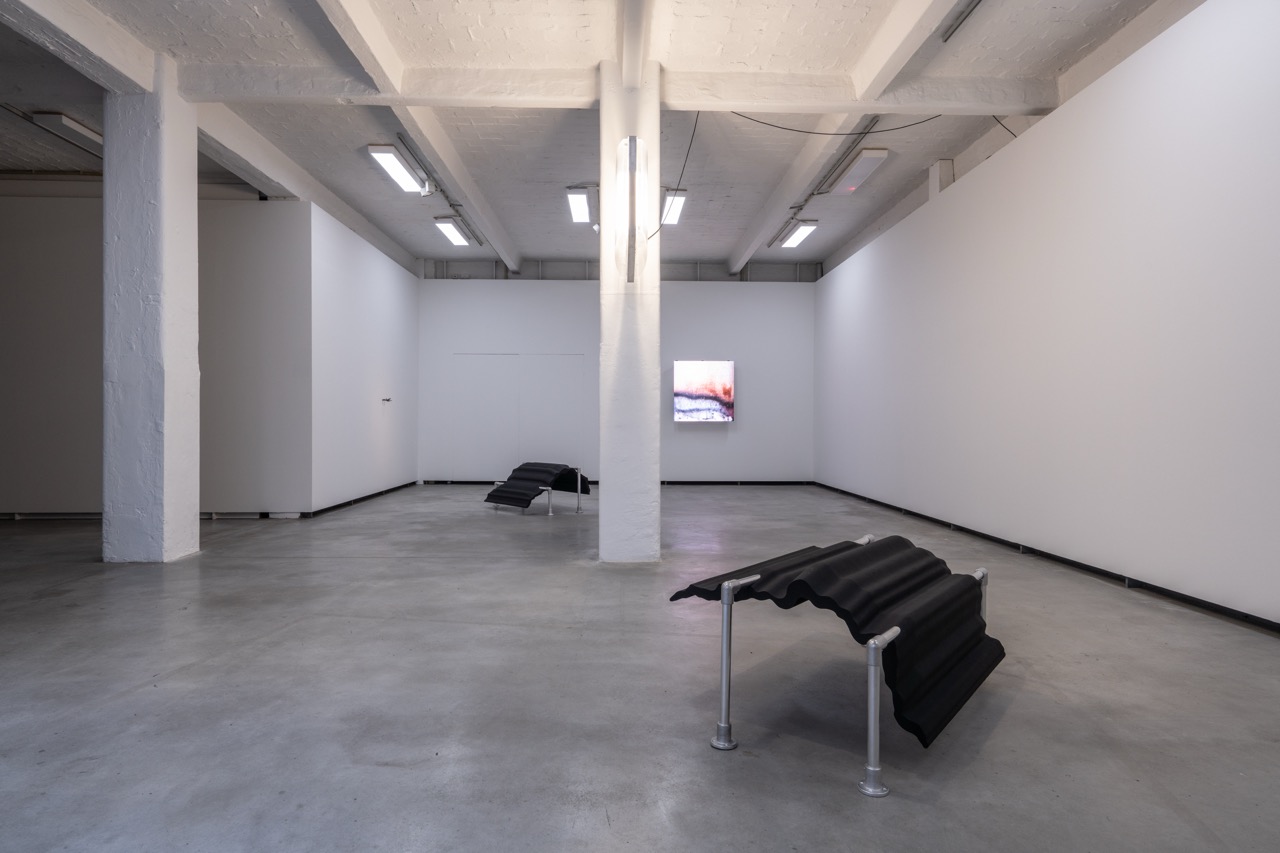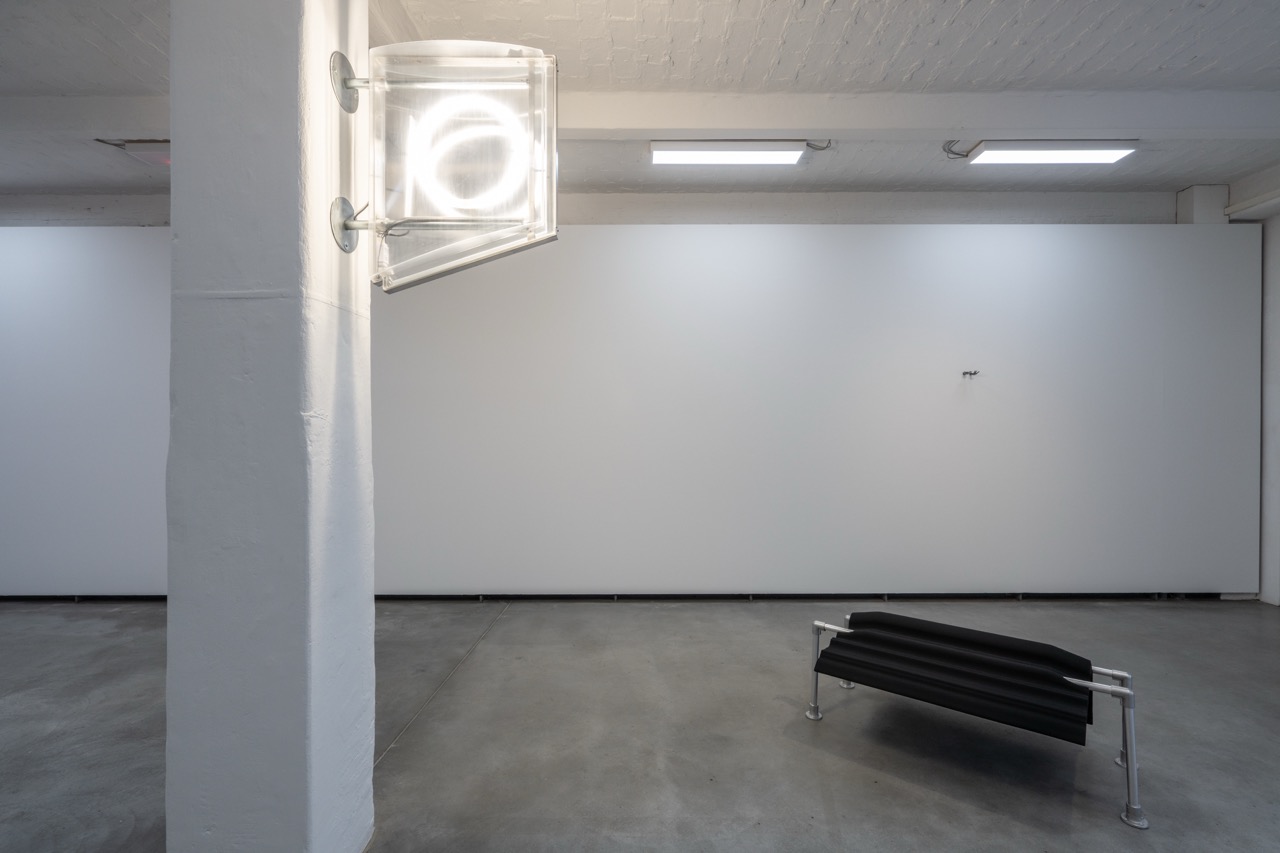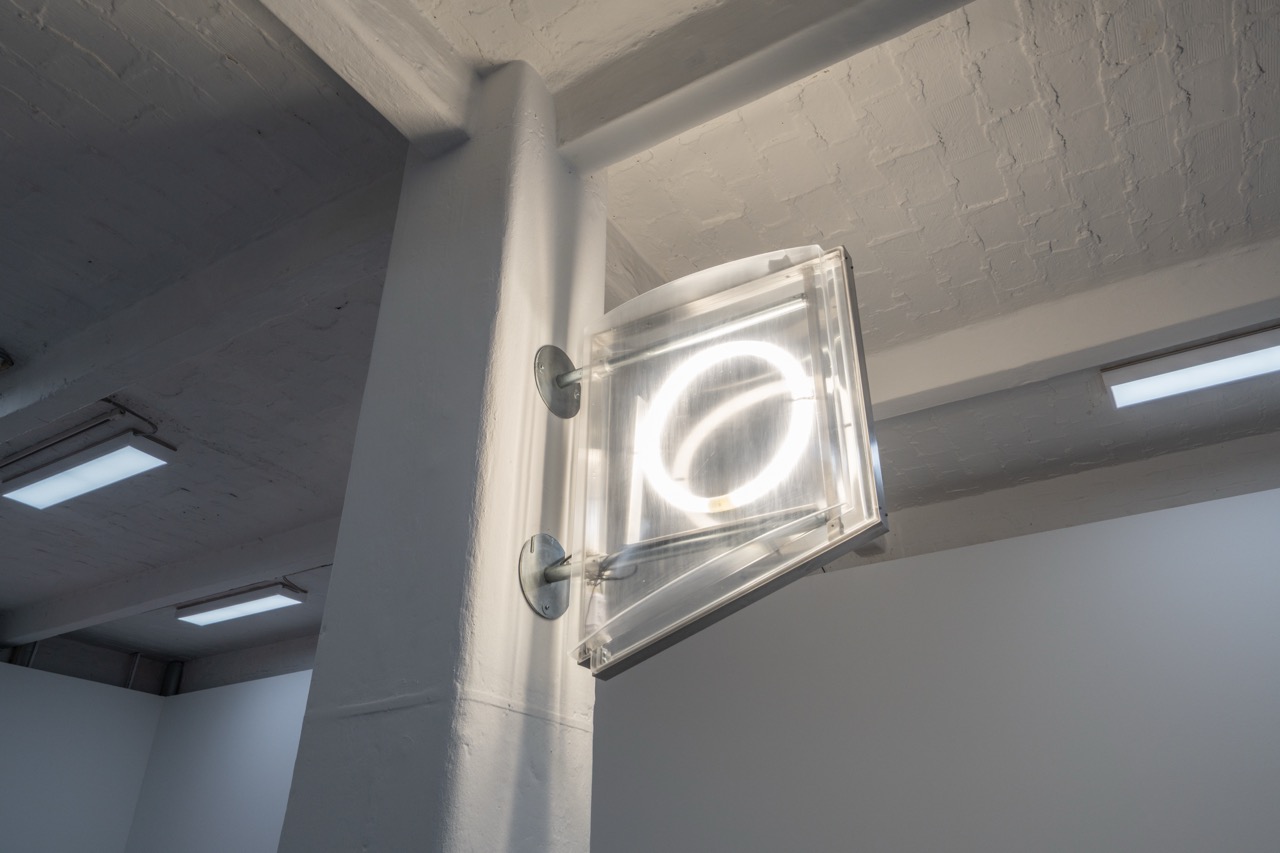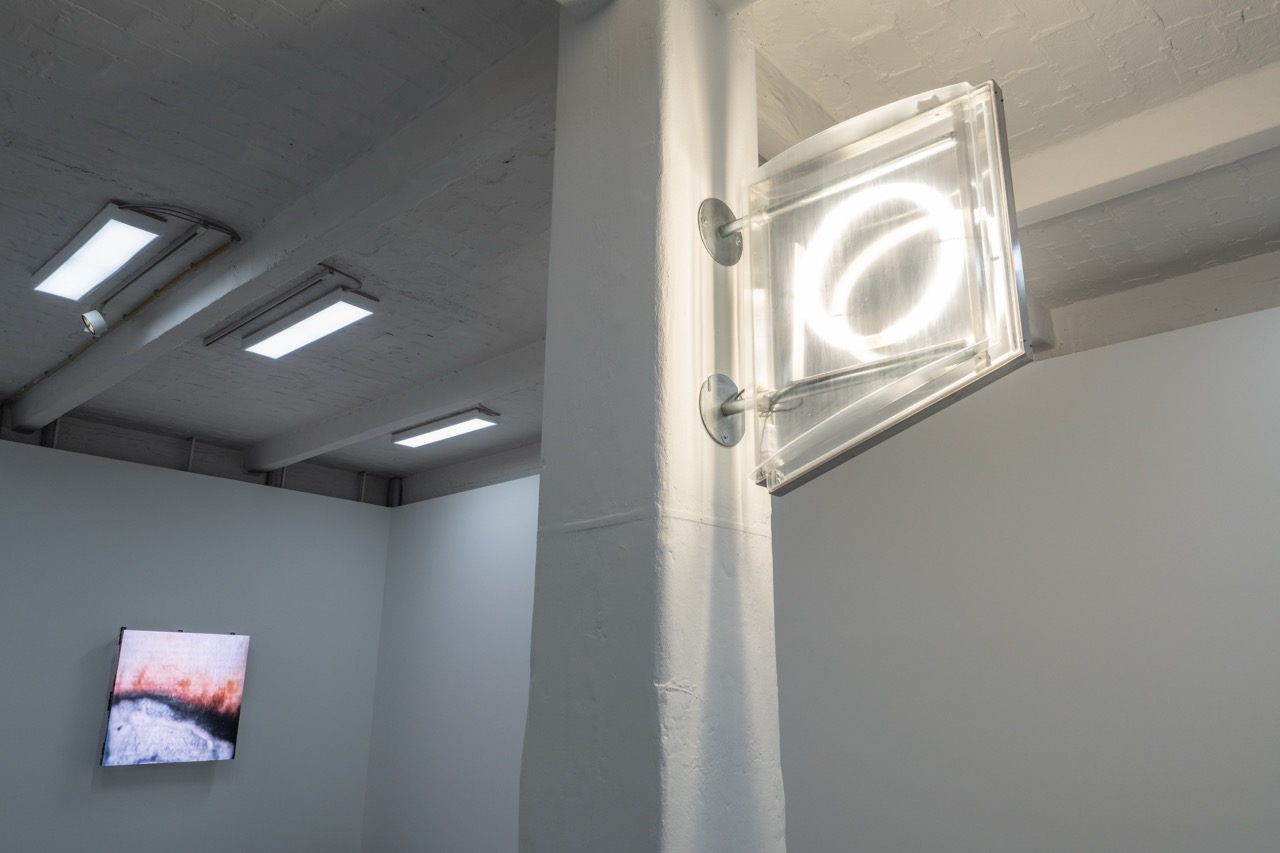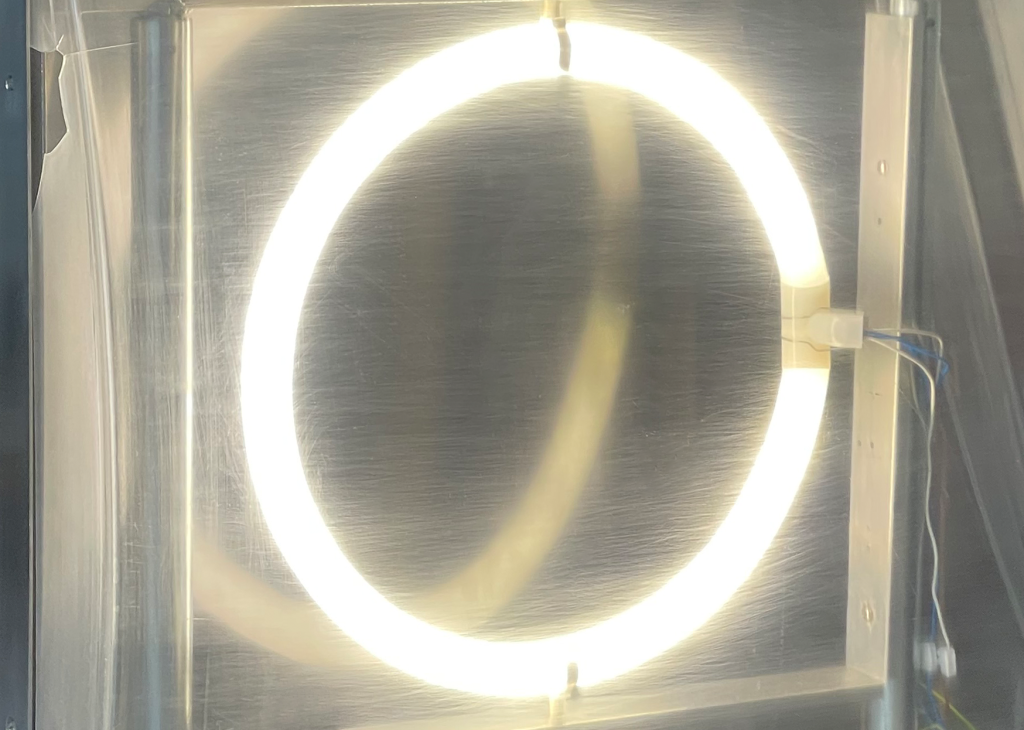
Upon entering Andreas Brunner’s exhibition Substitute for a Sunset, one’s gaze is drawn to a former illuminated sign, mounted high and completely stripped of its original content. Transparent panel, bare aluminum, exposed electronics. A cold circular light glows evenly, without image, without text, without address. What normally captures attention and promises meaning appears here as a pure apparatus. Technology no longer functions as a means to an end, but as visible infrastructure. The light continues to operate even though its content has vanished. The circle forms a closed system: intense, continuous, self-referential. It recalls the promise of modernity—progress, orientation, the production of meaning—but also an order that now sustains only itself. As a feedback loop, the light points to systems that keep running even after their goal has been lost. The circle evokes both the Ouroboros—a symbol of a snake devouring itself, representing endless recurrence—and a horizon that suggests hope without fulfilling it.
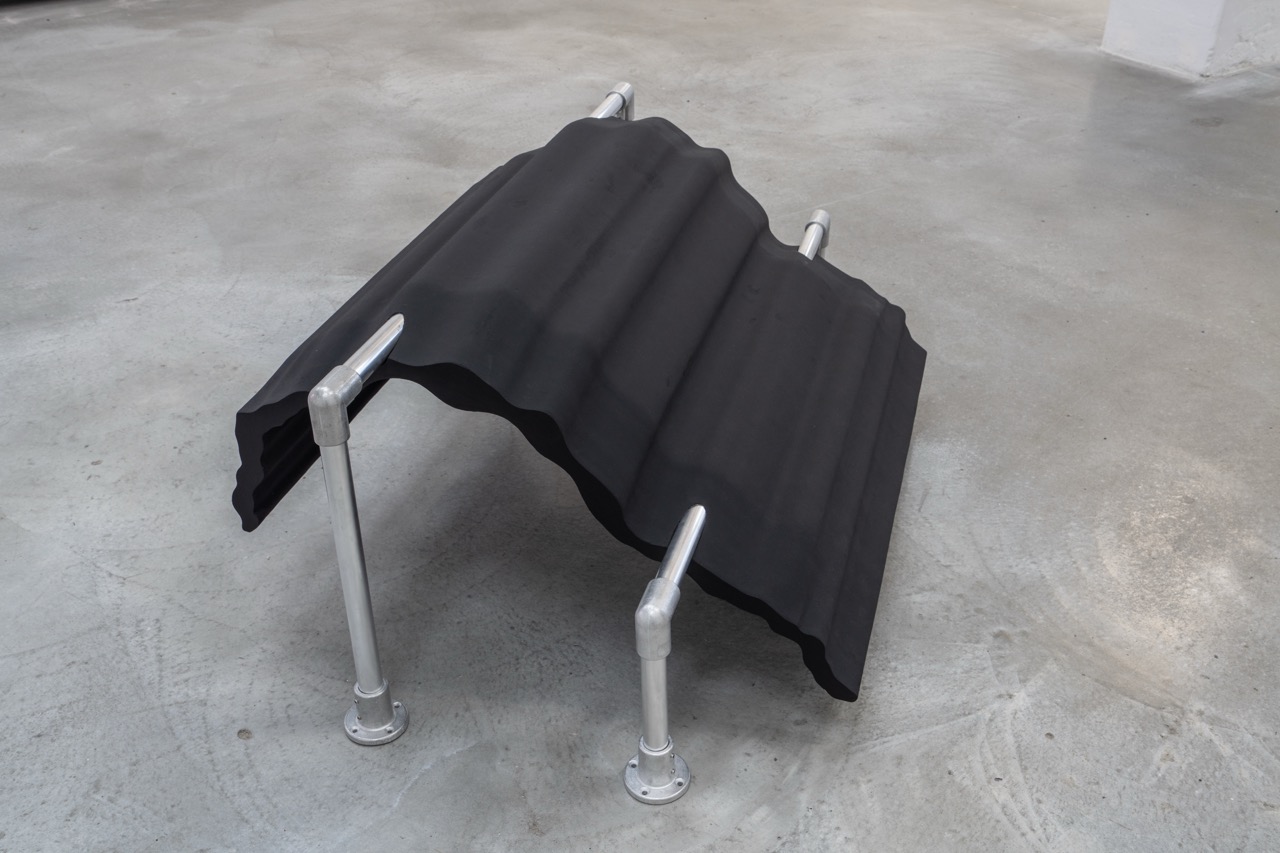
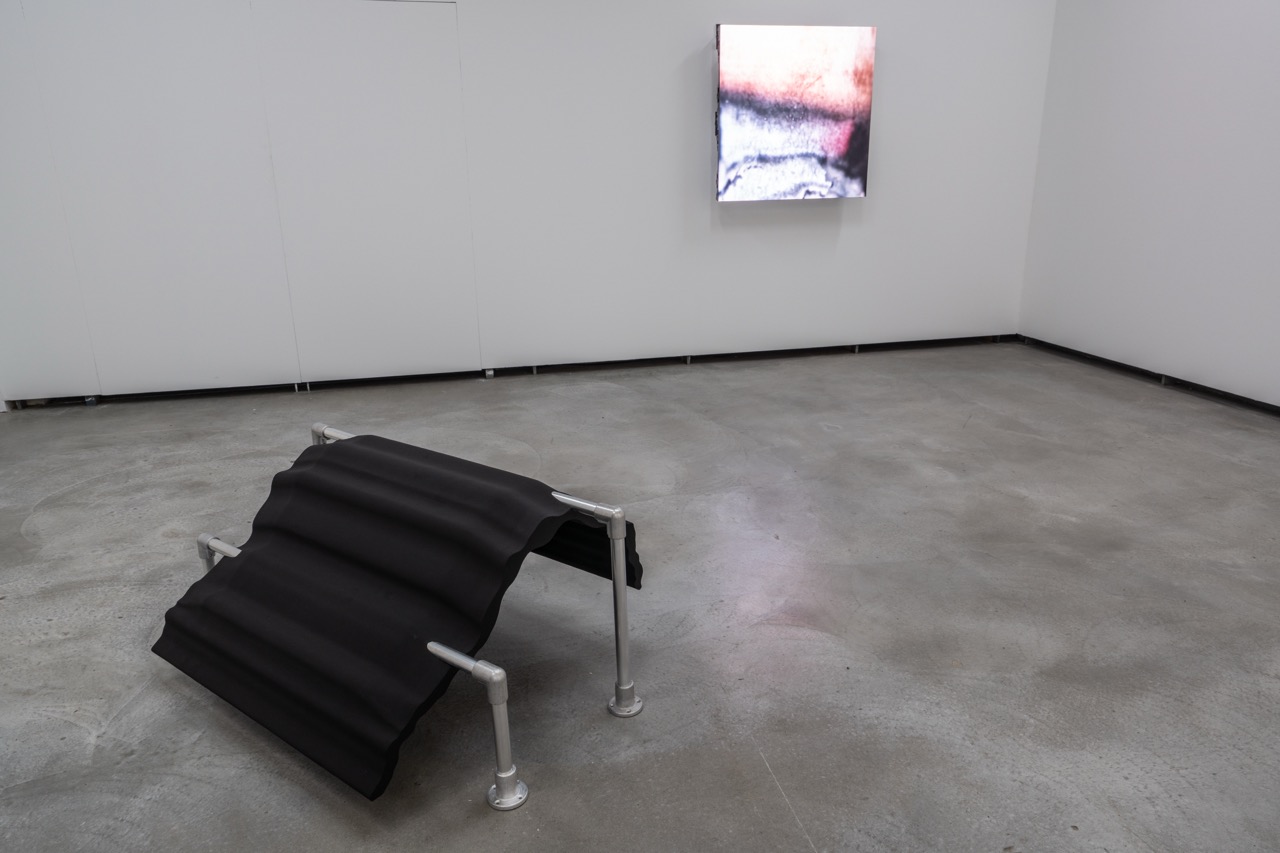
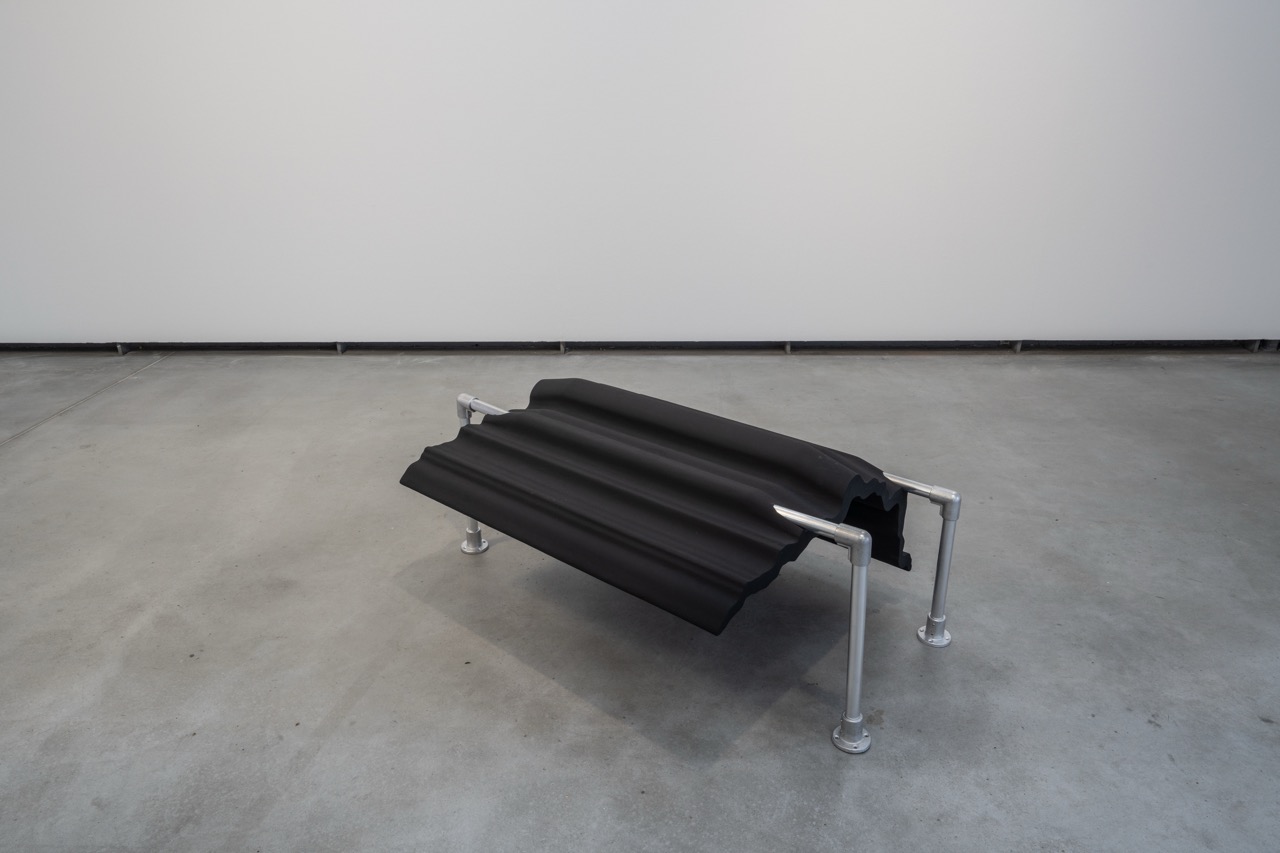
Distributed throughout the space are black sculptures. Vertically elongated forms derived from the shadows of random piles of rubble. Their surfaces appear smooth, reduced, industrial, yet their origin lies in decay. They make visible what modern design often conceals: the ruins of the past, the excluded and the repressed. These bodies are not romantic ruins but abstracted relics. They seem extracted from a chaos that continues to operate beneath the surface—nature, the organic, entropy. The aluminum rods that support them undermine any notion of autonomy. Order appears here as a fragile construction that must be held, stabilized, and artificially erected. Form follows dysfunction.
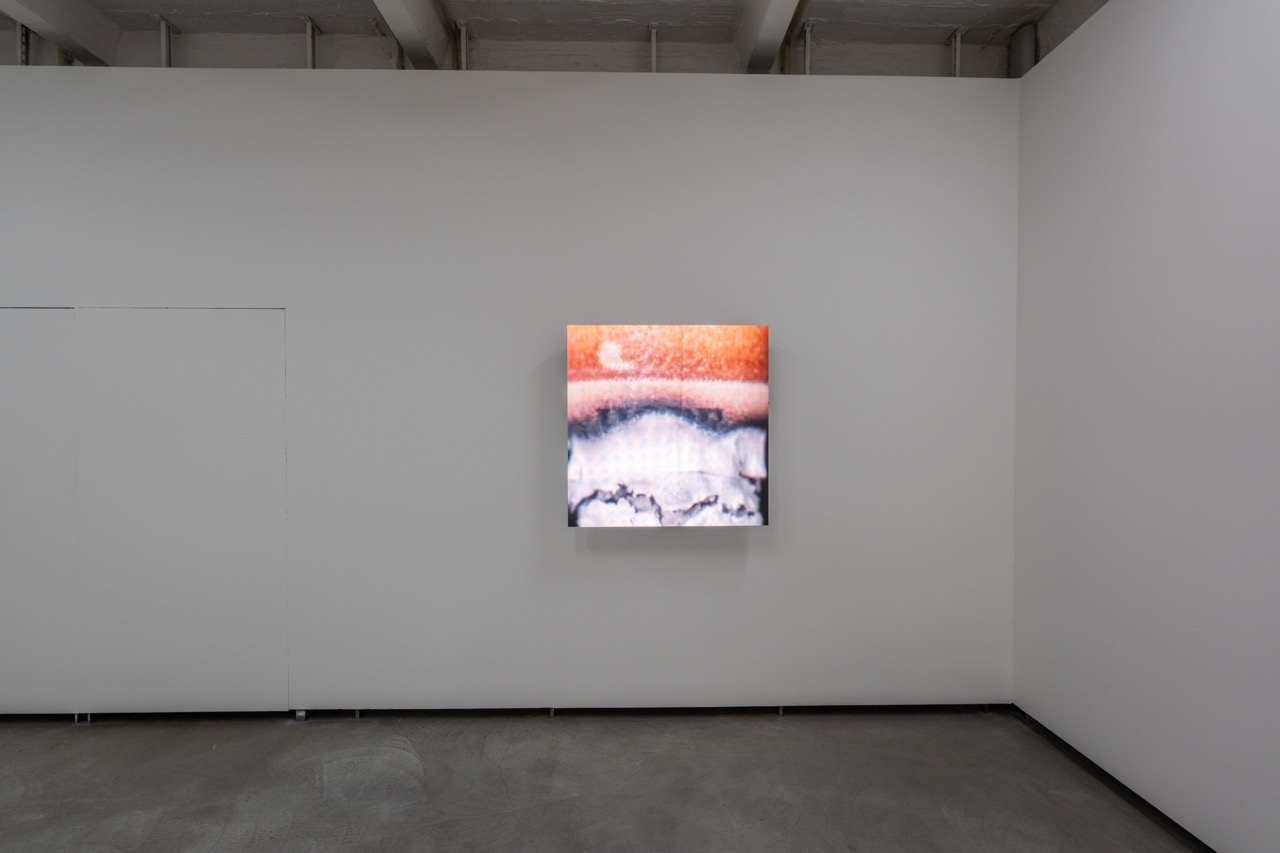
A burning horizon directs the gaze along a glowing line across the LED monitor on the wall. The movement of the fire dictates seeing, forcing proximity and prolonged attention. Only at the end does what is shown reveal itself as a cigarette of the brand Hope. The video runs backward and starts again from the beginning. Hope appears here as a loop, as perpetual repetition without arrival. It keeps upright what is exhausted. Like Sisyphus, the loop generates movement without progress. The cigarette becomes a symbol of a capitalist promise: short-term relief, easy consumption, controlled self-soothing. Hope is not negated but functionalized. Inhale, exhale. Drawing energy, becoming exhausted. The cycle of consumption—up to self-destruction.
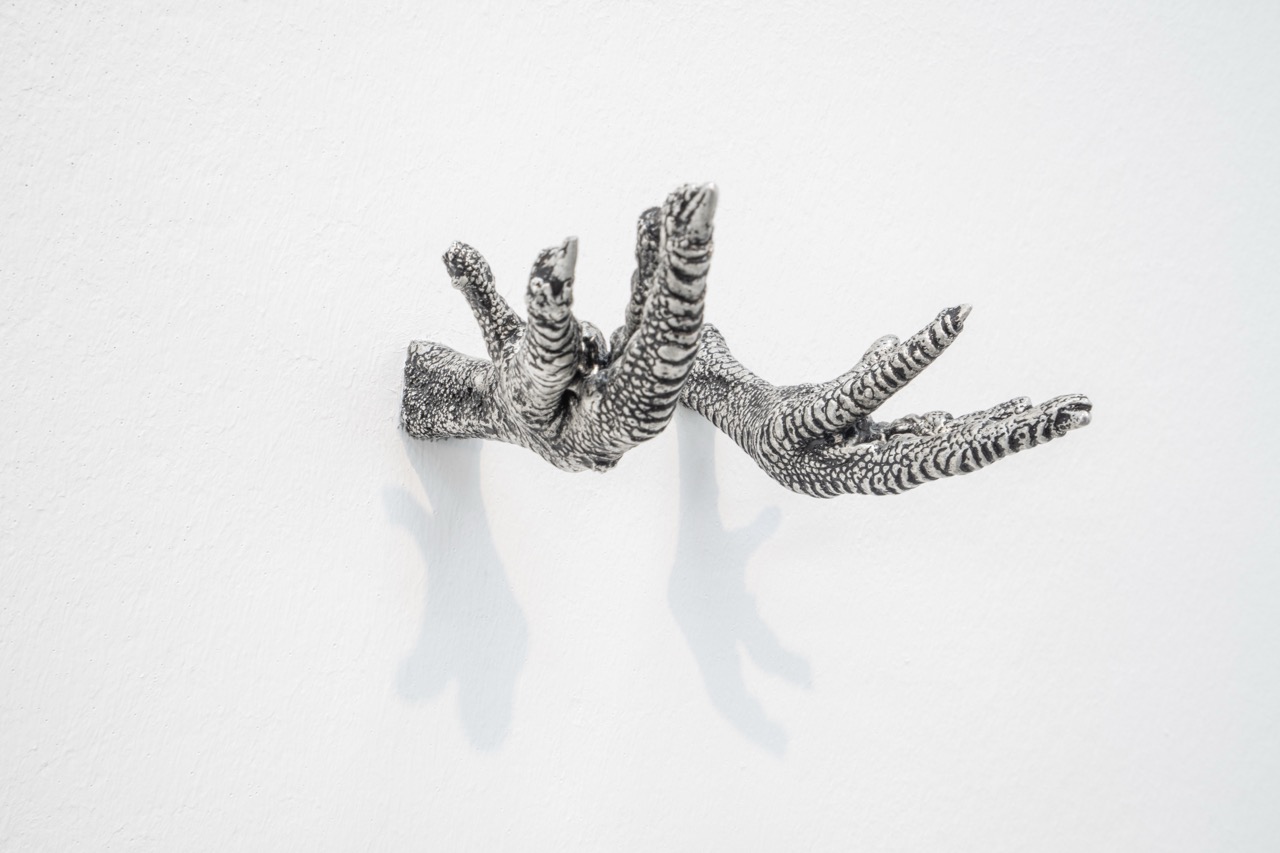
Tin feet protrude from the walls, roughly screwed in place. Claw-like fragments, as if frozen at the moment of impact. They recall bird feet, snake skin, a mythical hybrid creature. The natural and the artificial intertwine, yet movement is halted. It feels as though something uncanny might break through at any moment—a chimera, a basilisk, a hybrid of rooster and snake whose gaze petrifies the other. Crash Landing marks the point at which modernity itself hits the ground: human evolution as a technical being encounters its limit. The organic returns, not as idyll or harmony, but as disturbance, as disruption.
Together, the works in Substitute for a Sunset unfold a field of tension between light and shadow, visibility and invisibility, order and rupture. They reveal a fragmented present in which systems continue to run and the repressed repeatedly pushes to the surface—not as a solution, but as a persistent irritation that structures the space and calls the promise of modernity into question.
Text: Michel Rebosura