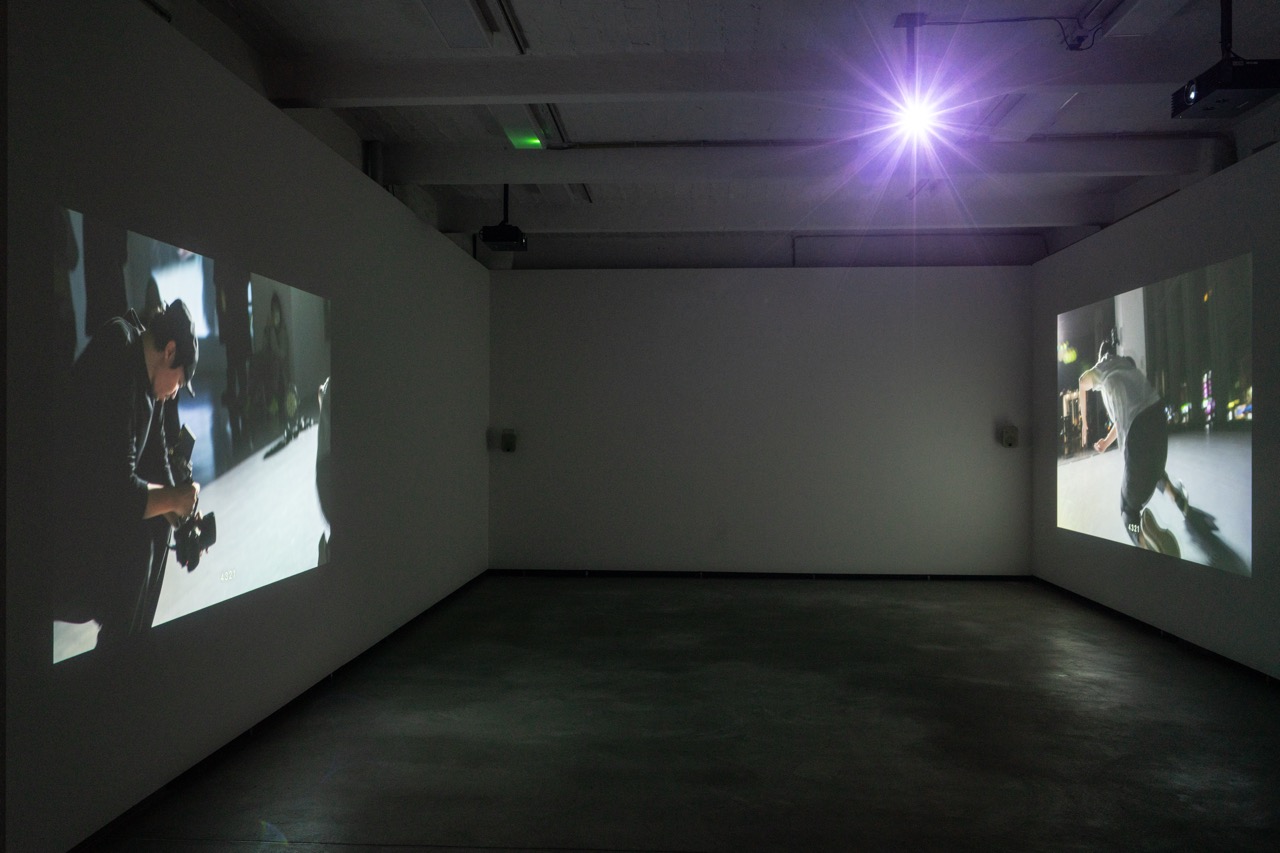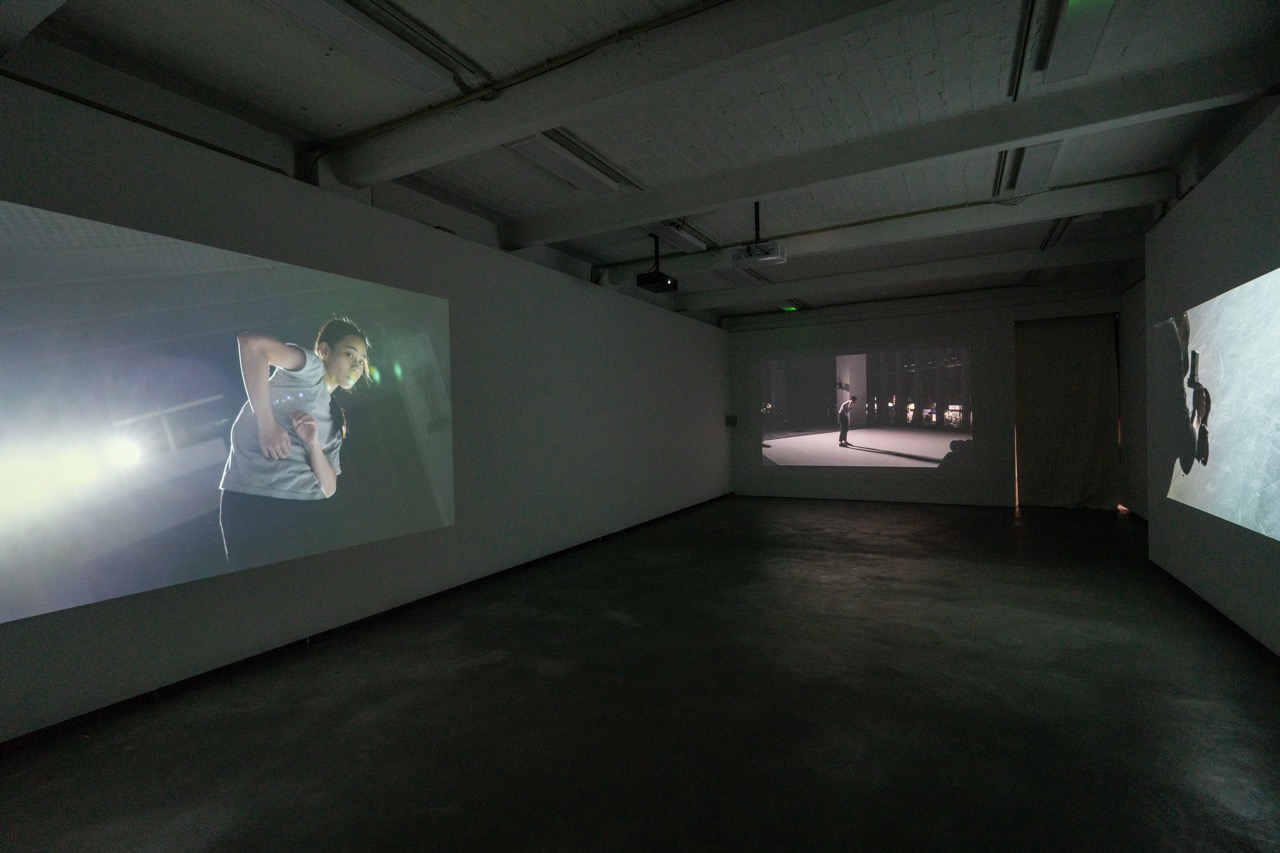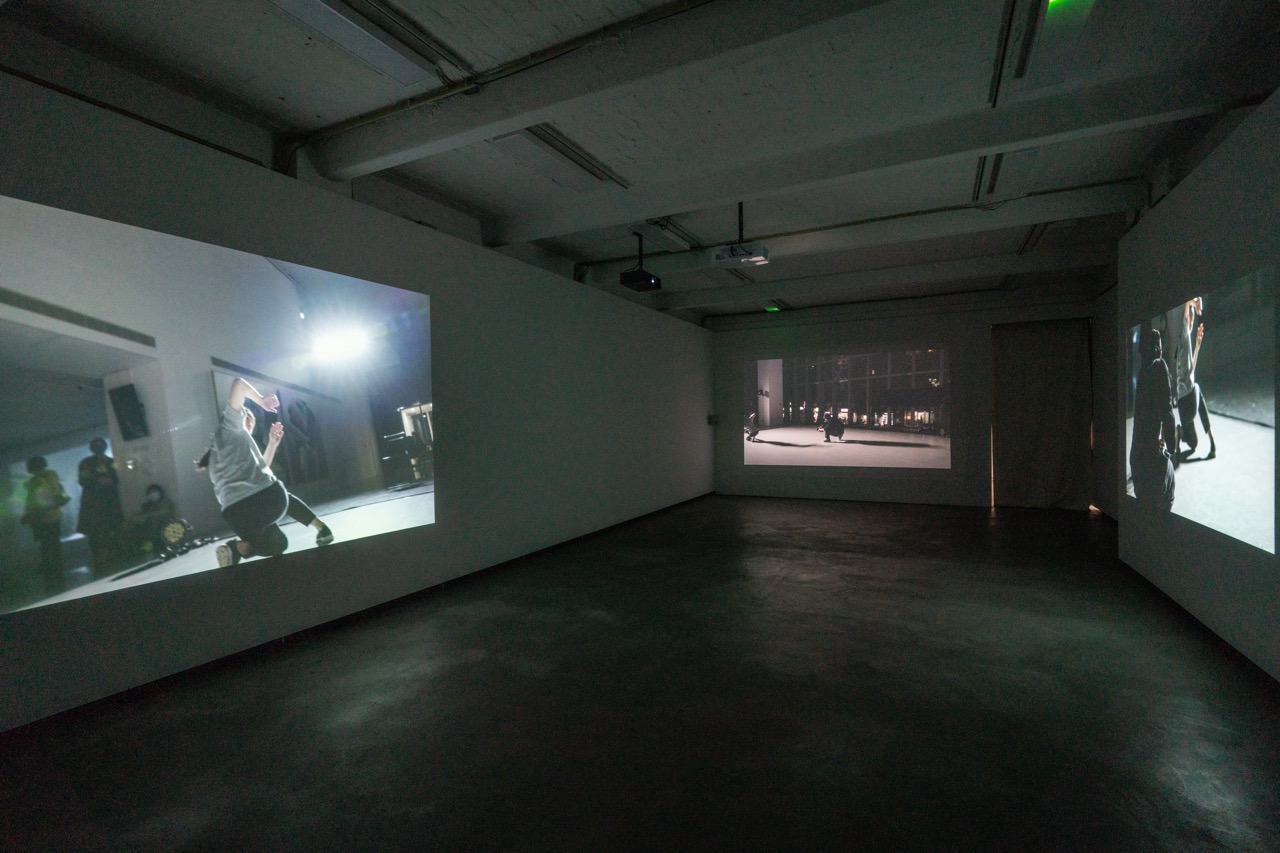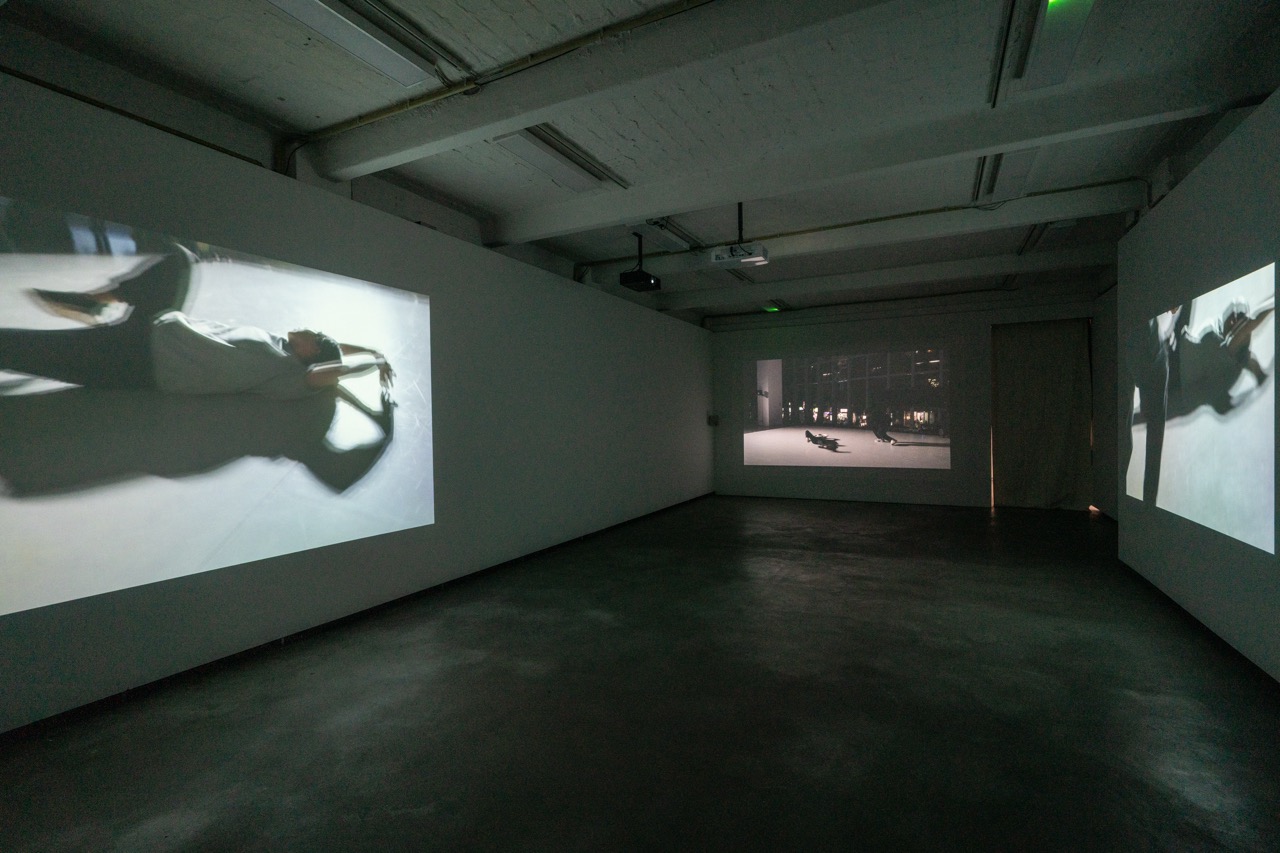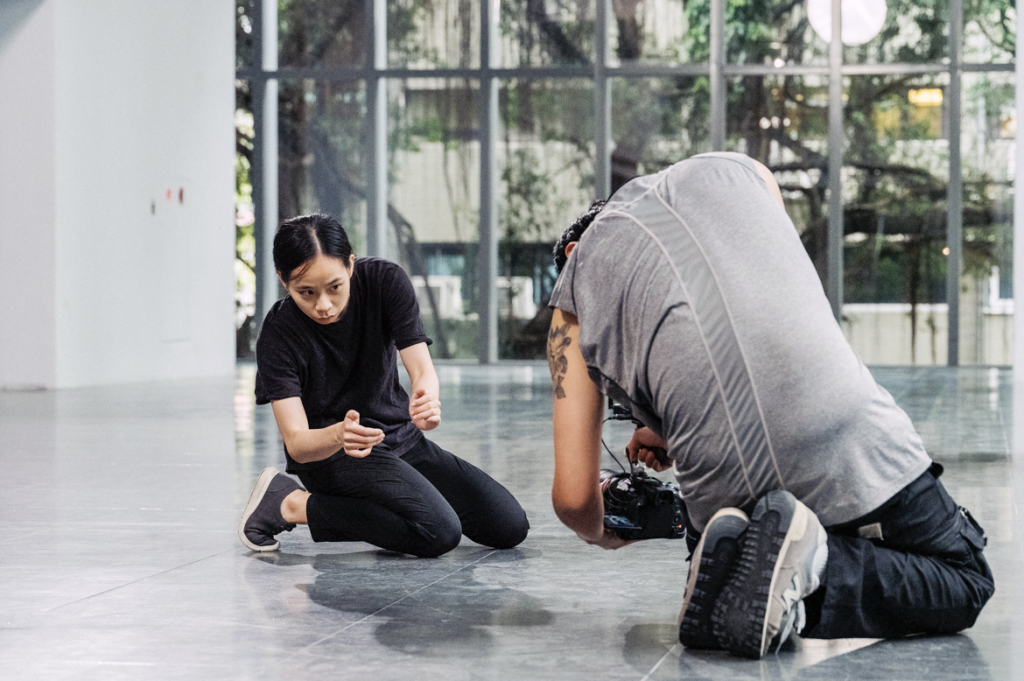
In This is not a Dance Film, the dancer and photographer become mutually active participants in a choreography where the act of filming itself becomes the driving force. The dancer responds to the camera, and the camera responds to the body – a loop of movement, gaze, and control emerges. At first, the roles seem clearly defined: the dancer dances, the camera films. But the movement of the camera points to something else: it is active, it follows, it reaches its limits, and forces the body to react. Much like a cinematic chase, where perspective and pace define the drama, perception shifts continuously. This is not a dance film.
Cinematography here becomes a form of choreography itself. The camera moves through space, frames shots, speeds up, lingers, and forces evasive movements. The dancer does not orient herself[1] around a clear sequence but to the logic of being pursued: to the rhythm of the camera, to hesitation and acceleration, to angles and distance. At the same time, the physical work of the photographer comes to the forefront. Image production is not seen as a neutral act but as a physical, time-based process where effort, attention, and control are negotiated. The shot becomes a situation where power dynamics become visible: Who determines the moment, who controls the framing, who reacts to whom? Body and apparatus intertwine, not separating, but emerging mutually in their interplay.
The directing plays a central role here. Guidance on composition, timing, and movement structure the process without predetermining it. The commands are less about prescribing an outcome and more about generating tension, rhythm, and holding attention. The director, camera, and body operate within a structure of interdependent relationships: the camera directs movement and gaze, the body responds, and the director adjusts. Each instance is both controlling and responding. The technical apparatus does not function as a passive tool but as an organ that connects actions, shifts hierarchies, and creates perspectives.
The three-channel installation transposes this dynamic into space. The images were originally created during a live performance at the Museum of National Taipei University of Education (MoNTUE) and were projected in real-time. In the exhibition space, three large projections surround the viewers. The work is divided into five chapters, corresponding to different modes of movement and perception that follow the director’s instructions. They range from warm-up sequences, to playful hide and seek segments and to more dynamic chases. The shifting images between projections activate the space, urging viewers to continually change their position and physically follow the movements. Perspective shifts, approaches, escapes, and pursuits become palpable; the gaze is in motion, and the space transforms into a stage.
Situated at the intersection of photography, film, and theater, the work explores how filming techniques such as tracking, shifts in perspective and temporal compression can give structure to performative situations. The tension between live presence and editing are of particular interest: between the moment of action and its subsequent order, between immediate bodily experience and cinematic construction. The image is not presented as a finished result but as a process that unfolds in the space. The installation makes the cinematic logic of the follow tangible and transforms the camera, body, and gaze into a living, structure that can be experienced sensually, pulling viewers directly into the movement, allowing the performative tension to be experienced as a spatial event.