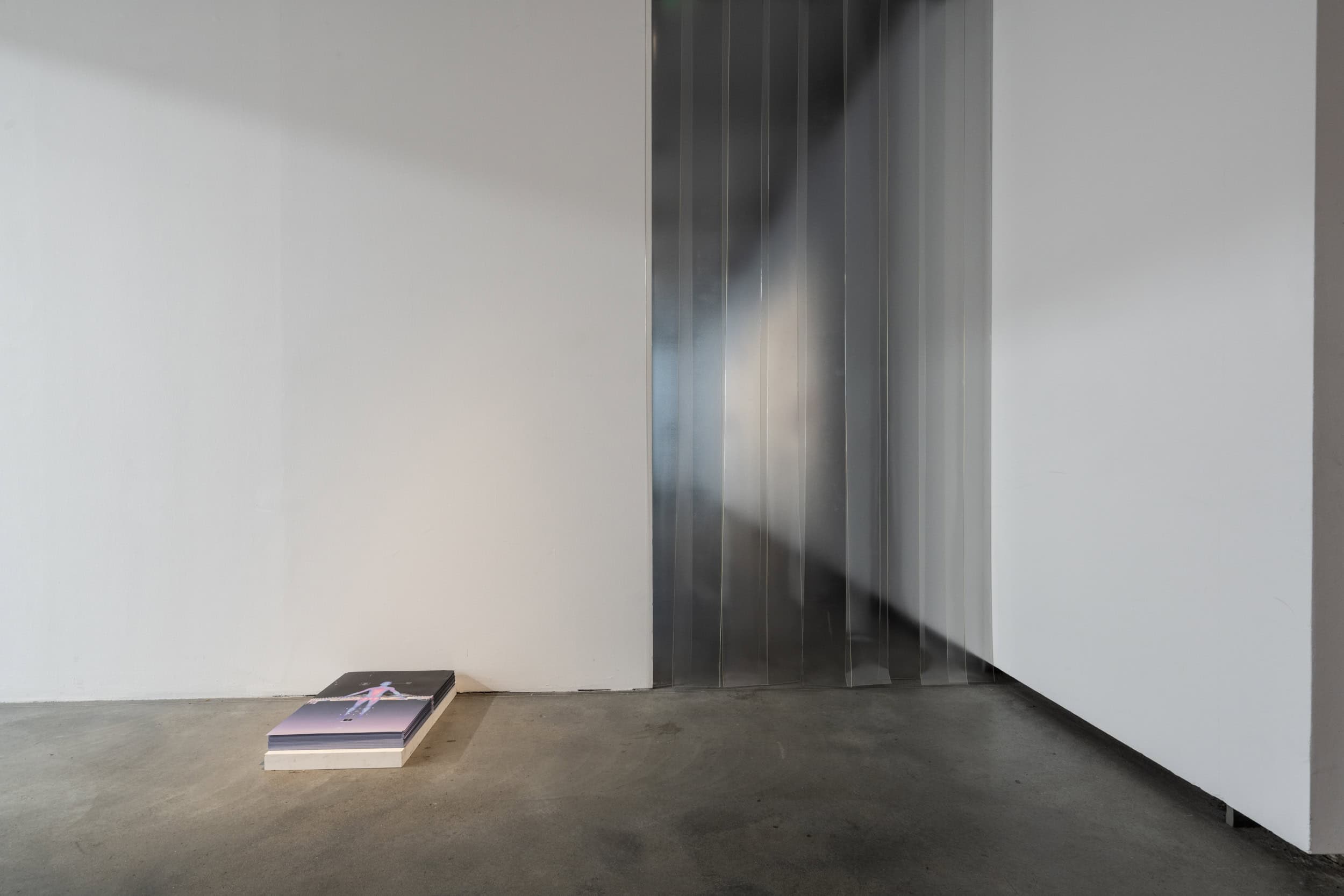
What is the place of the body and the human in today’s virtual landscapes? How do image-making and image-altering tools affect and transform the value of bodies and human experience? These are the questions that run through Francisco González-Rosas’s installation.
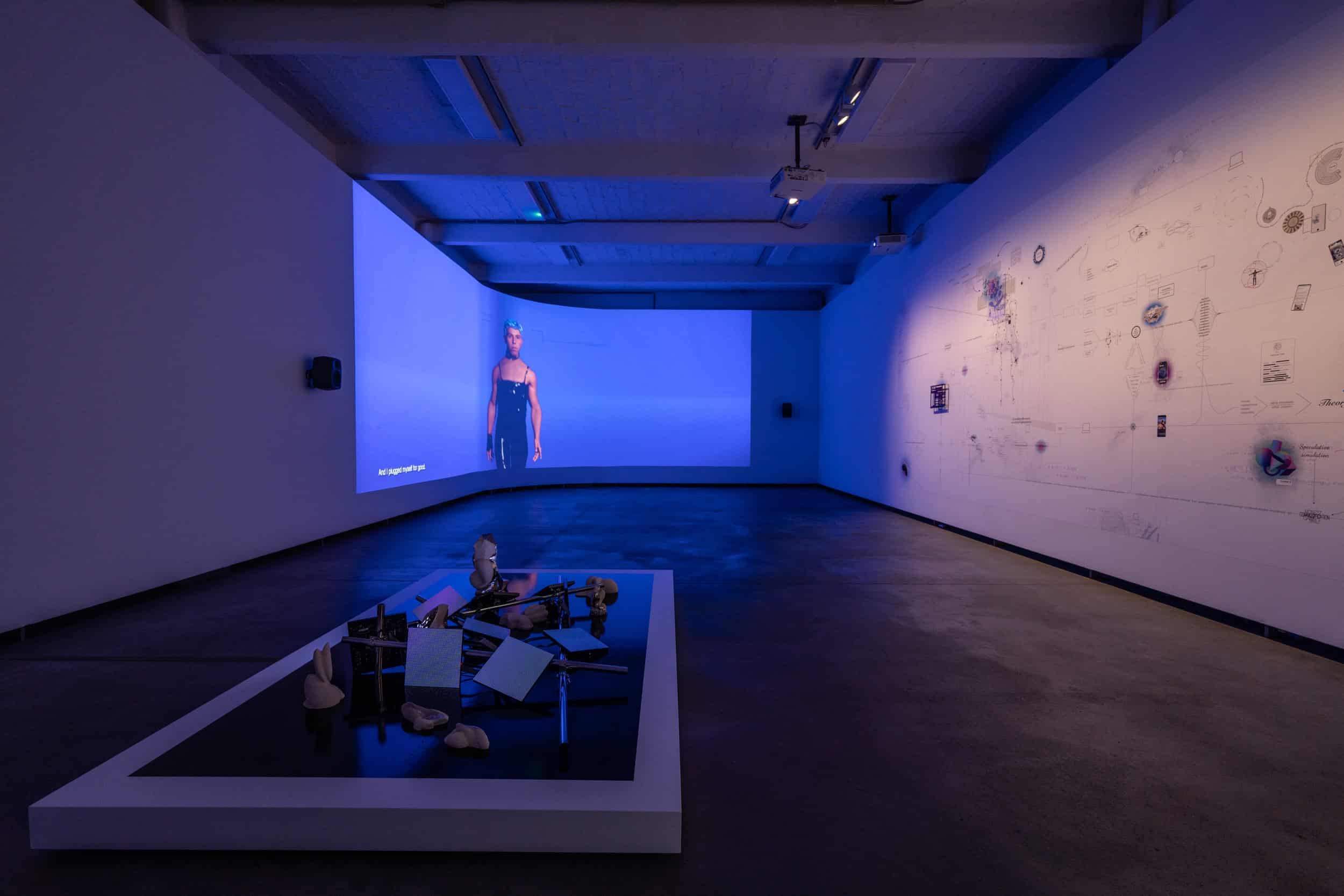
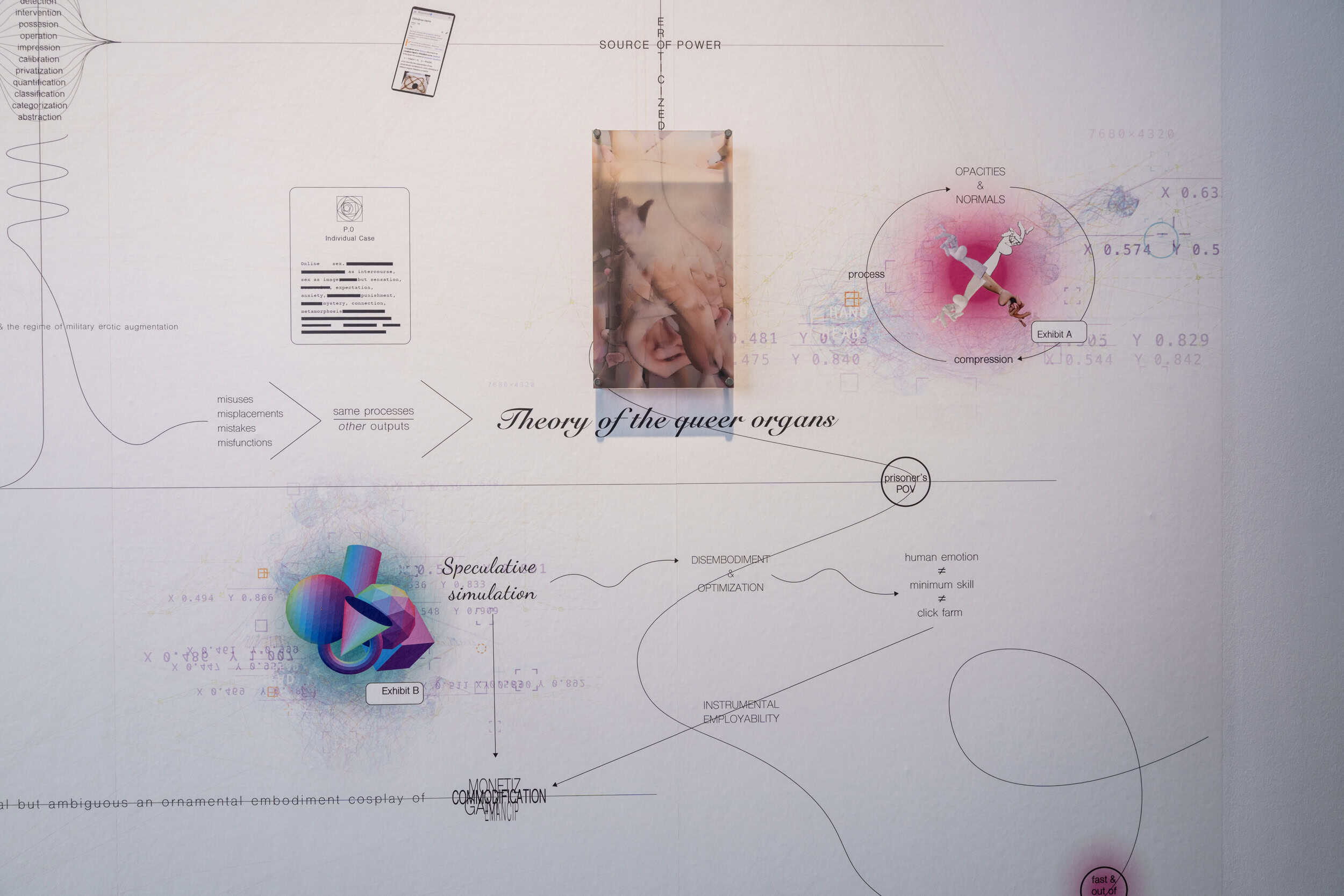
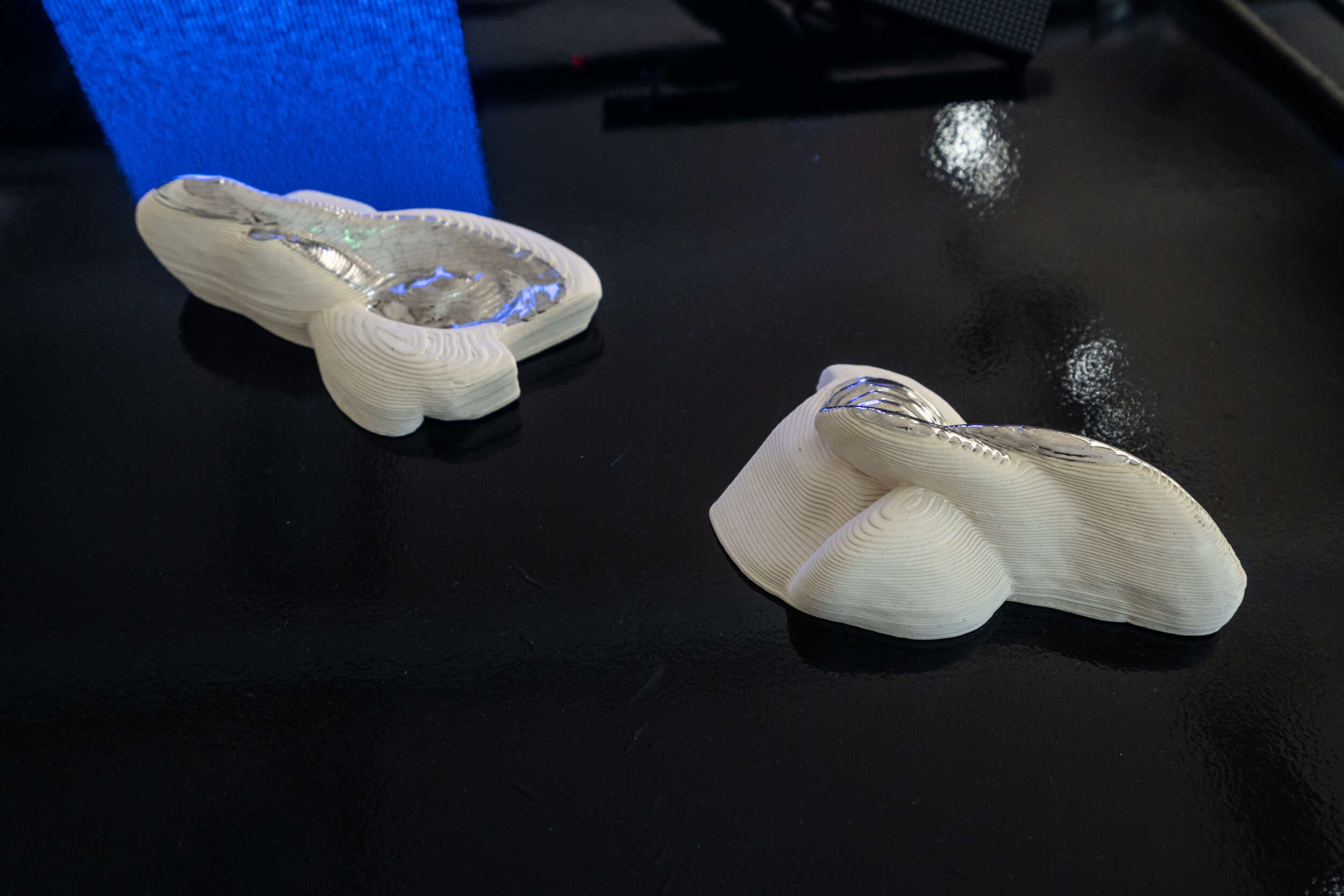
Entering the room to the right, we encounter a large graphic print-out on the wall reminiscent of a diagram or a map. It consists of text boxes, dotted and straight lines, arrows, and a number of varied images. References to the digital alteration of the human body appear alongside visuals produced directly through tools that, while aiming to represent the body, generate peculiar images that collapse three-dimensional space onto a surface, multiply and alter body parts, and merge them with geometrical figures. These images form the basis of 3D-printed clay sculptures, which are placed on a low white structure with LED panels in the middle of the room.
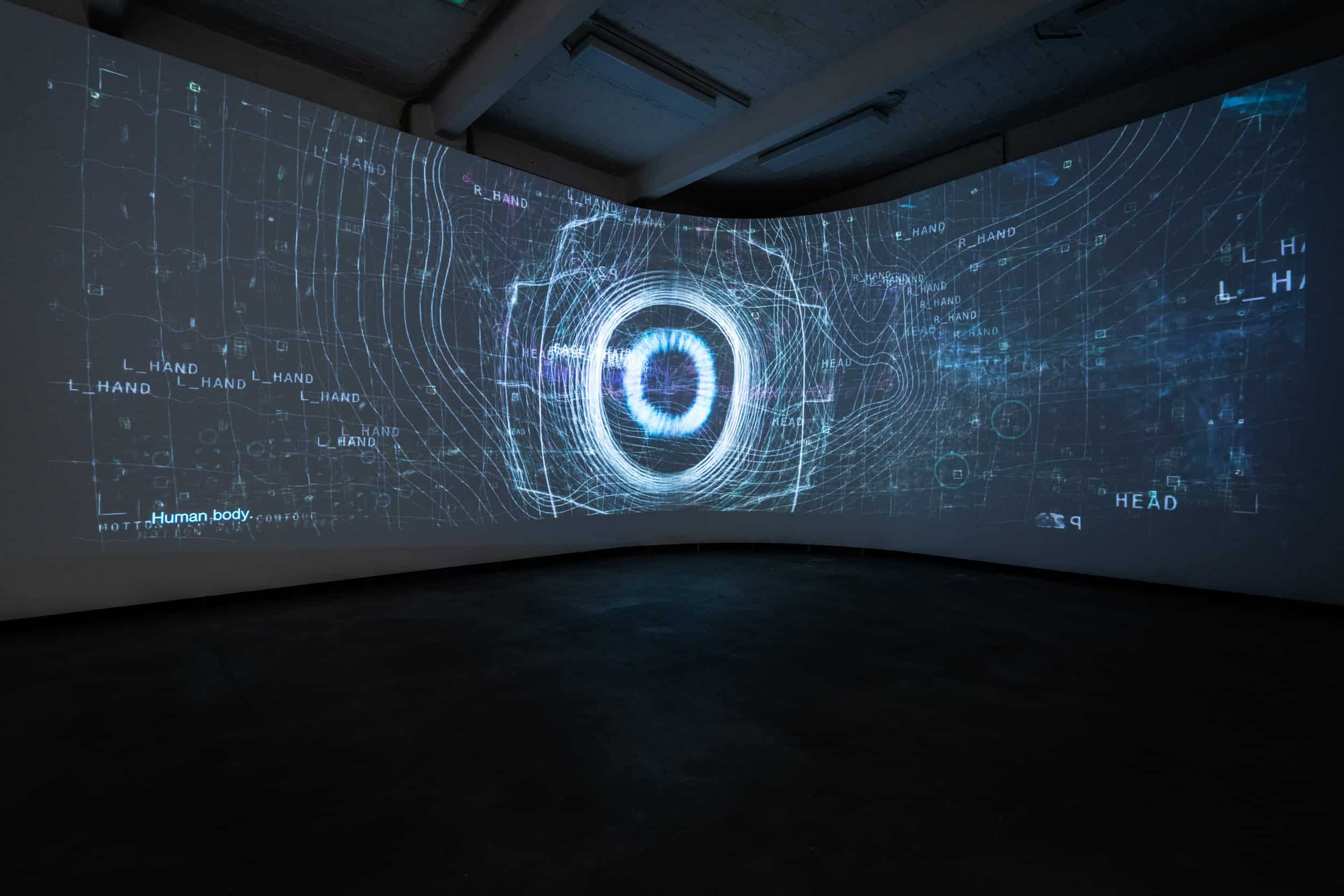
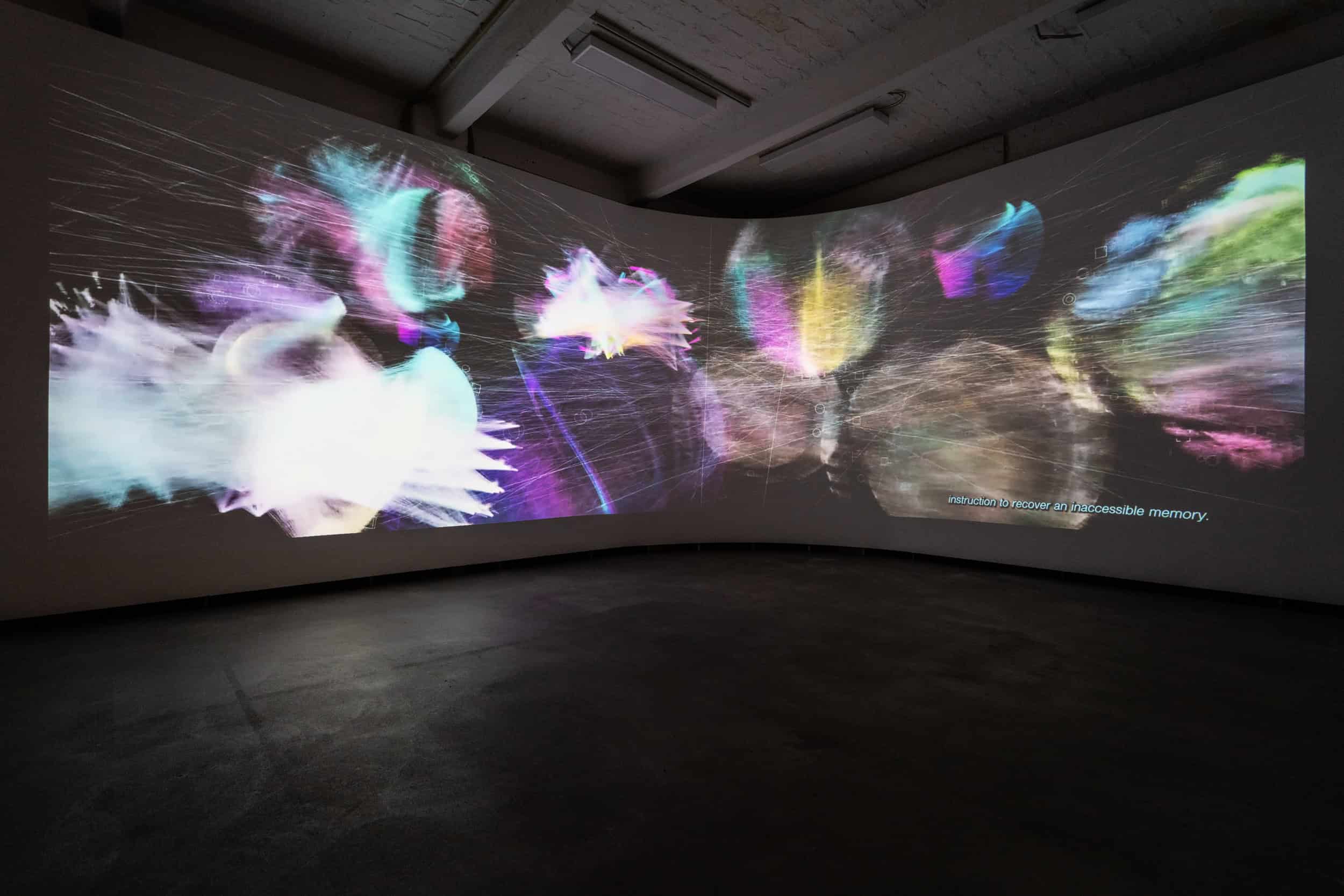
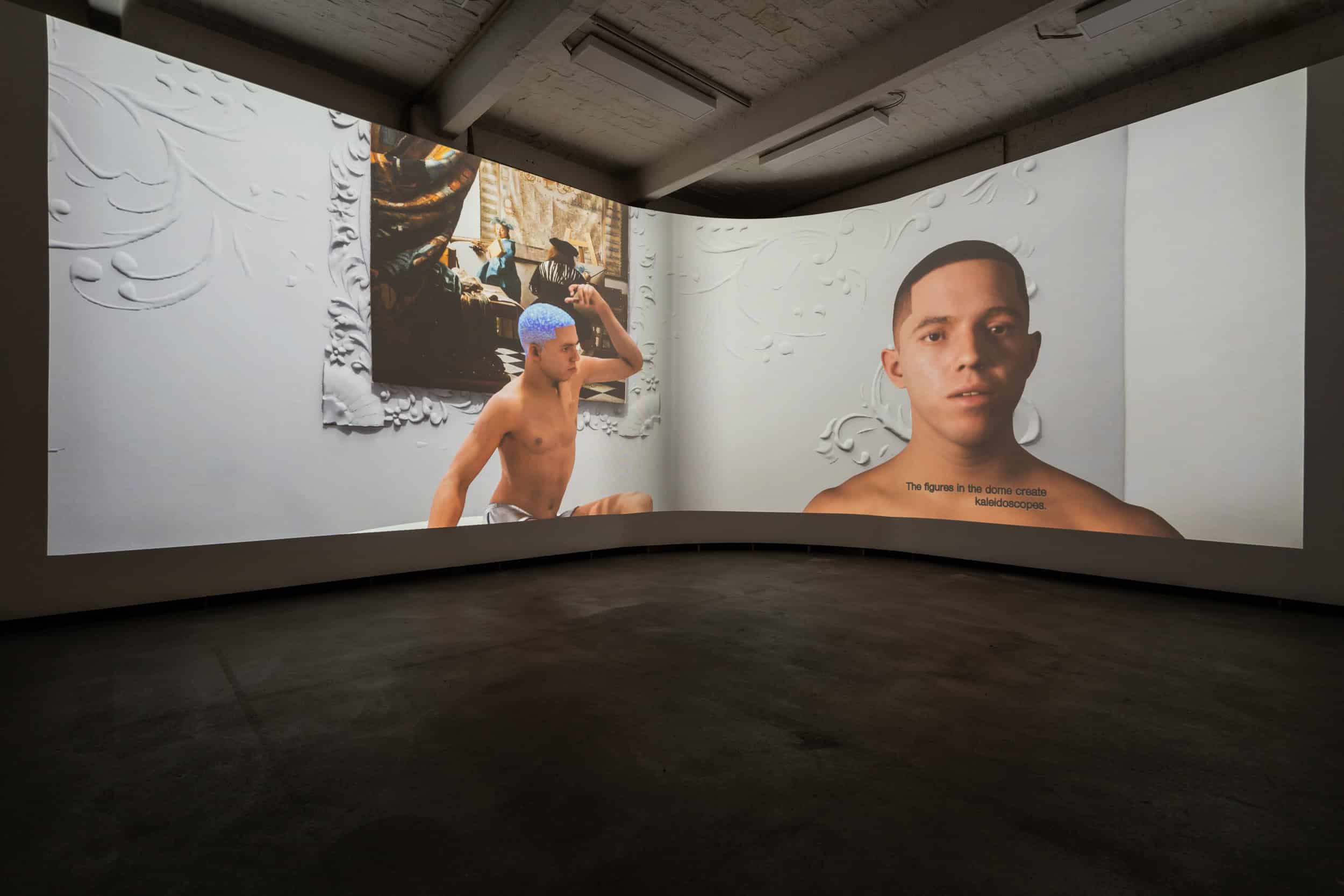
The materiality of the clay contrasts with the visual appearance of the rest of the work, which is characterized by the digital recreation and alteration of the human body. Facing the installation, we see and listen to a video work projected onto a curved wall, presenting a body-scan-generated avatar of the artist – a digital object called MetaHuman. At times appearing half-naked, the avatar recites sentences in a flattened version of Francisco González-Rosas’s voice, speaking in Spanish and English. It reflects on relations of power and on the histories and processes through which technology turns bodies into objects of exposure, consumption, commodification, extraction and sex.
Since the European Enlightenment, scientific and technological advancement has increasingly relied on the research, experimentation and exposure of racialized and sexualized bodies. Drawing on their own experience of migration and sexual dissidence, Francisco González-Rosas explores the workings of digitalization through a range of technologies and tools, including body scanning and 3D printing, using their own body as a model. The artist not only registers the felt dimension of technology, but by performing within its constraints, also intervenes in its mechanisms.
References to colonialism and the history of science recur across the wallpaper’s diagram-like graphic, a format associated with the systematic organization and exposure of knowledge. Yet contrary to such a disembodied, universal understanding of knowledge, the chart does not present easily measurable meanings. Some elements appear disconnected from the rest, such as the botanical depictions of plants indigenous to South America in the upper left. Something similar occurs with the installation in the middle of the room. Its arrangement of light panels and clay objects evokes a museum display of curiosities or objects of knowledge, yet it remains impossible to accommodate it within a single – and therefore dominant – interpretation. As a result, what steps to the fore are the materials and specific conditions of their creation, as are the technologies required to print or produce them. Image-making appears not as self-evident and objective, but as a contingent process.
What are the limits and what are the dangers of technological innovation and human exposure to digitalization? Through the exposure of their own body and the experimentation with and display of digital image-making and image-altering tools, Francisco González-Rosas’s work presents an embodied critique of science and technology and their urgent political implications.
Text: Sebastián Eduardo Dávila