Reed Still’s exhibition excavates the maintenance labour that structures basic human existence, turning it into a comedy of class relations in which those without property are trapped within an infinite cycle of temporary arrangements.
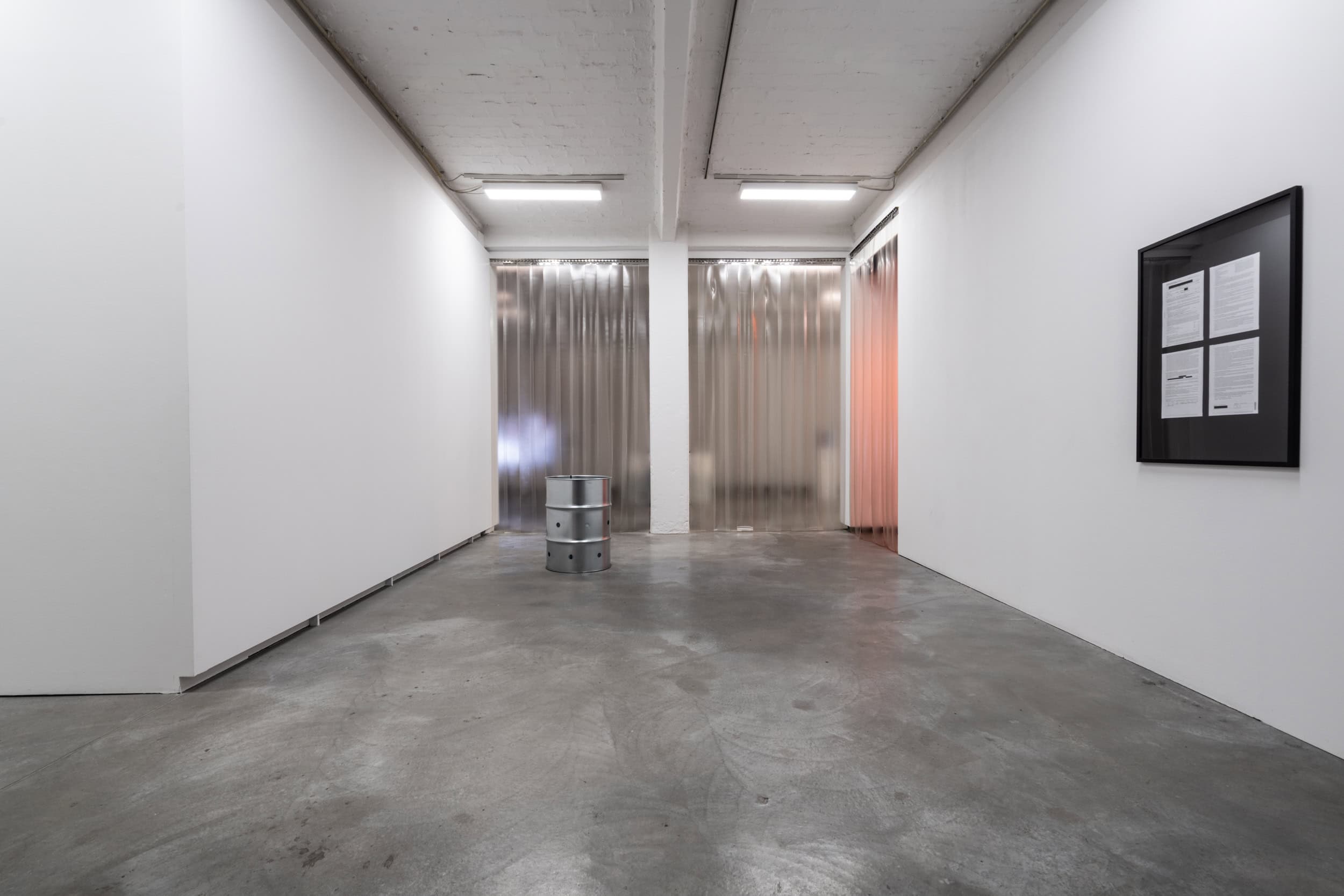
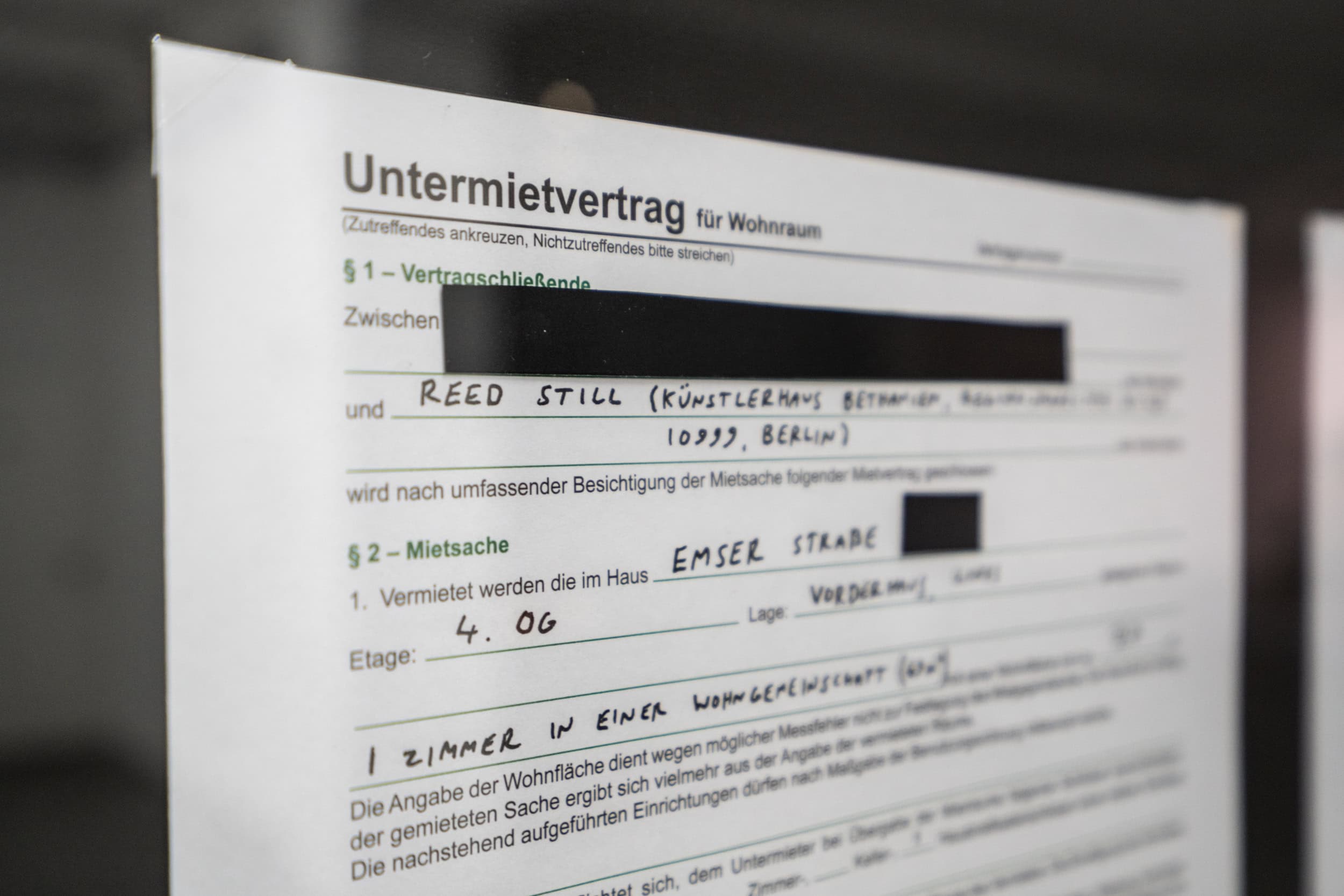
In a passageway on the ground floor, a professionally framed document is displayed on the wall. The Sublet, as it is titled, shows a fixed-term sublease agreement of the kind that Berliners would know all too well. Since the 2010s, the housing crisis in the capital has considerably worsened. Berlin’s reputation as an affordable place for international artists and for collective forms of living and working has given way to a situation in which every square inch of rentable space is fiercely contested. This produces new forms of sharing, in which one’s own living space must temporarily be relinquished to strangers. Yet this sharing is not motivated by altruism or guided by an emancipatory goal, but by the need to secure one’s own survival or to monetize even the briefest absence. The room to which the document refers is rented by the artist himself. His gesture is therefore connected to the precarious temporality of (artistic) labour not so much in metaphorical as in concretely material terms. Once the production budget used to pay the rent has been exhausted, the work ceases to exist, and the arduous search in a highly competitive space must begin all over again.
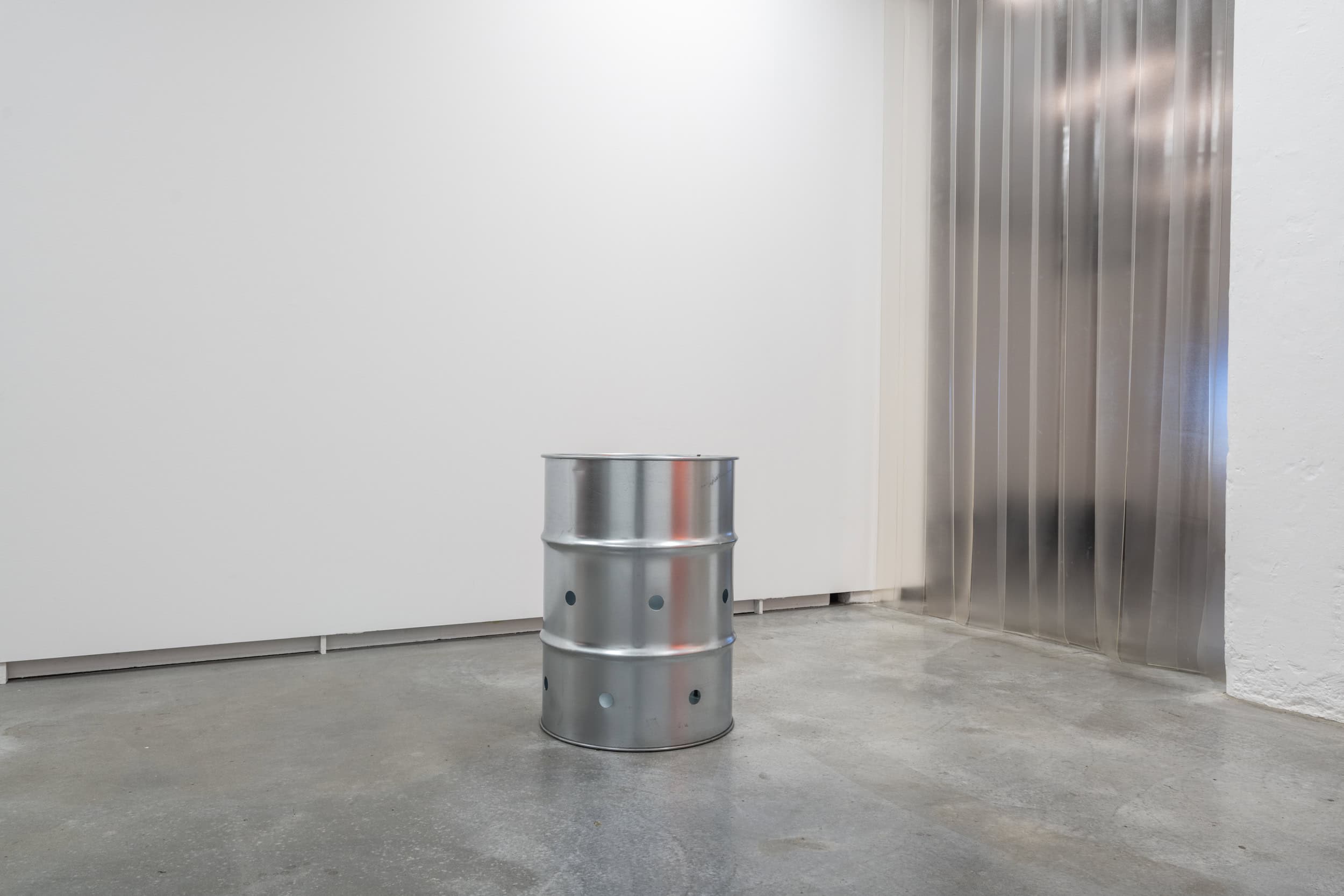
Opposite The Sublet stands The Barrel, a 90-centimeter-high steel barrel with holes drilled into it, whose materiality functions as a double signifier. It evokes both the aesthetics of detached minimalism and a burn barrel, an all-too-realistic cultural cliché of homelessness and the longing for warmth. The rim of the barrel is coated with cade oil, dispersing the smell of a campfire upon closer approach. Here, too, the idea of collectivity appears as a temporary means of survival produced by the very conditions that make individual existence increasingly untenable. The shared warming of bodies, and the relationships that emerge from it exist only until the fire goes out or the people gathered around it are violently driven away. The temporary relief of finding warmth is inextricably linked to an experience or anxiety of coldness.
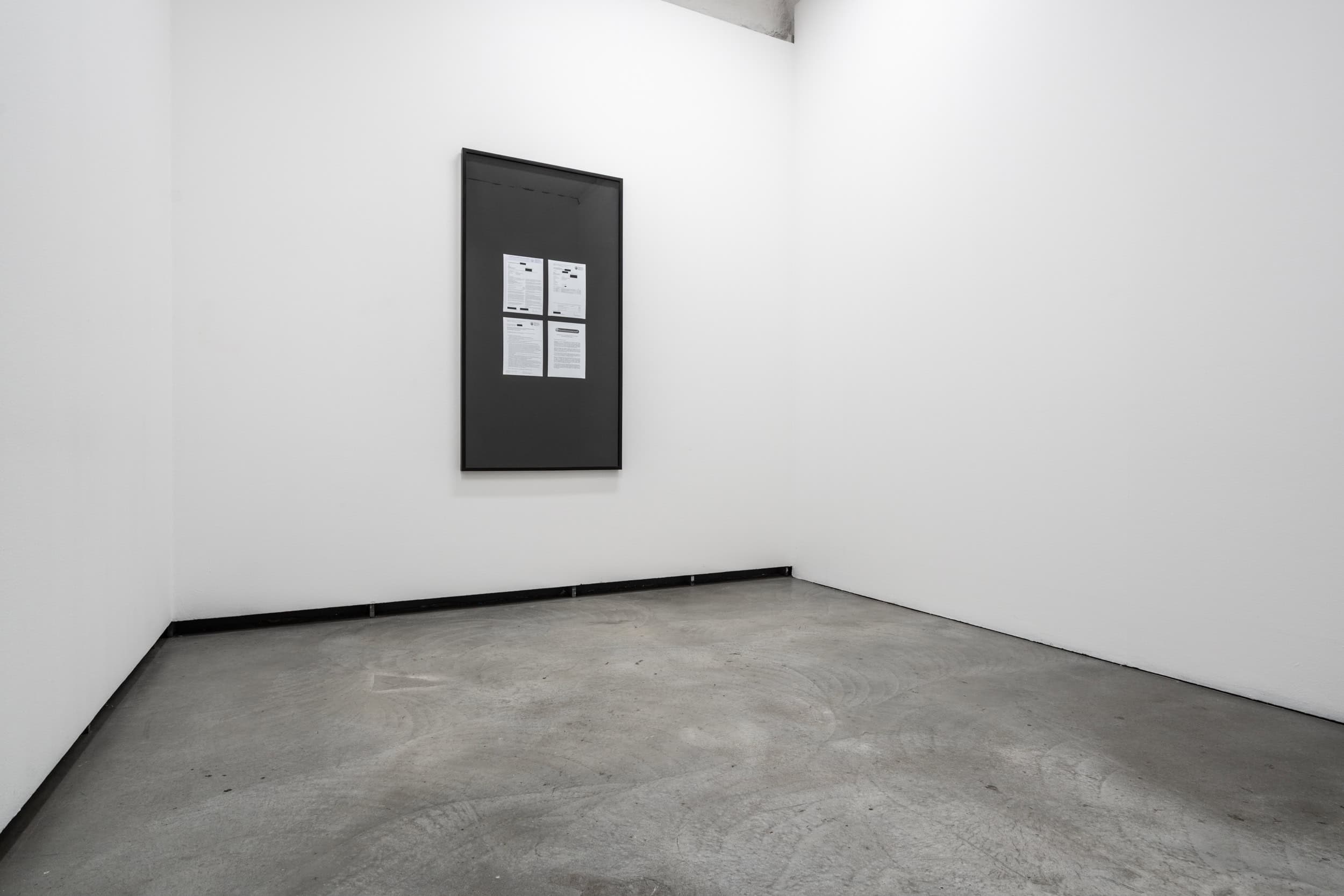
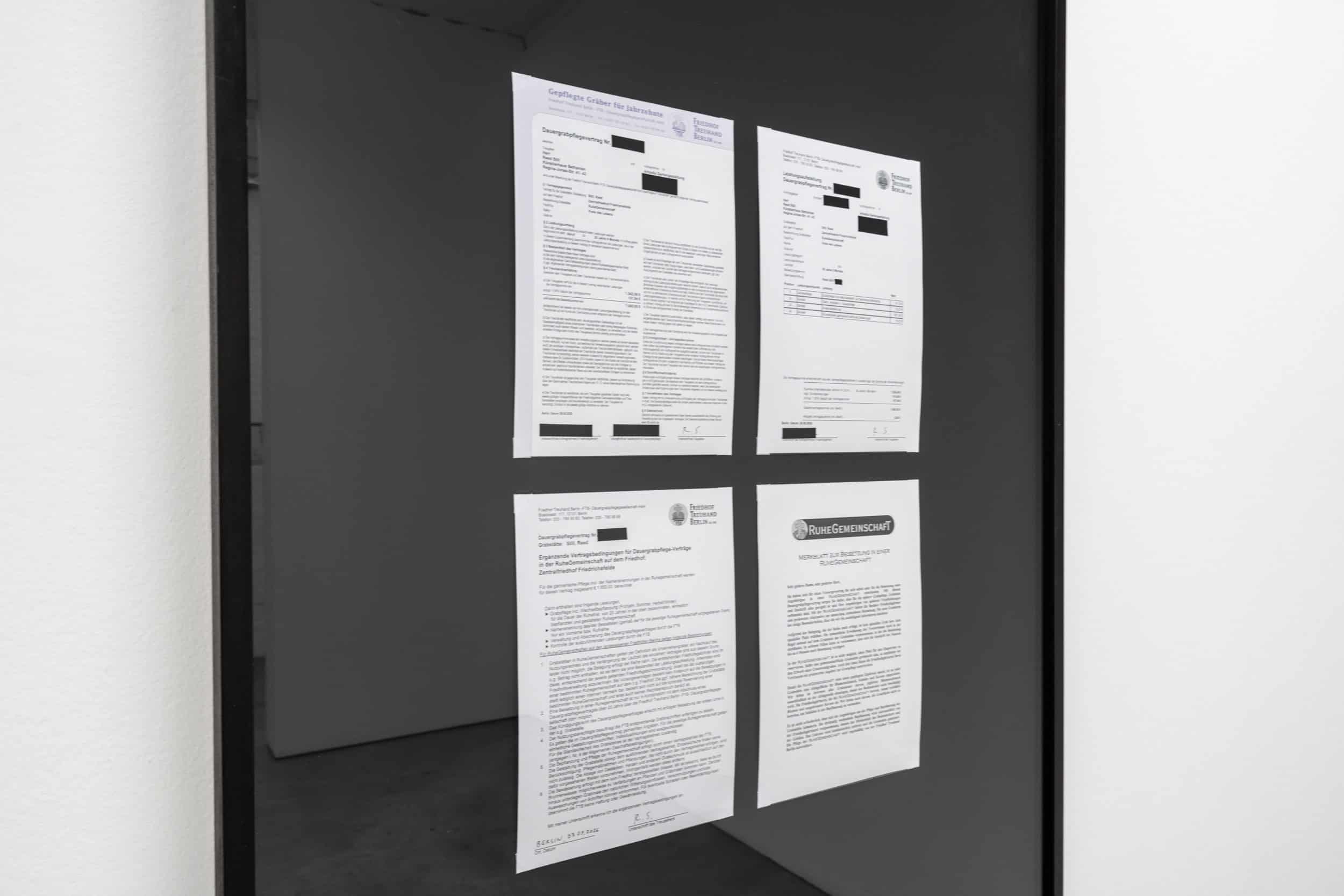
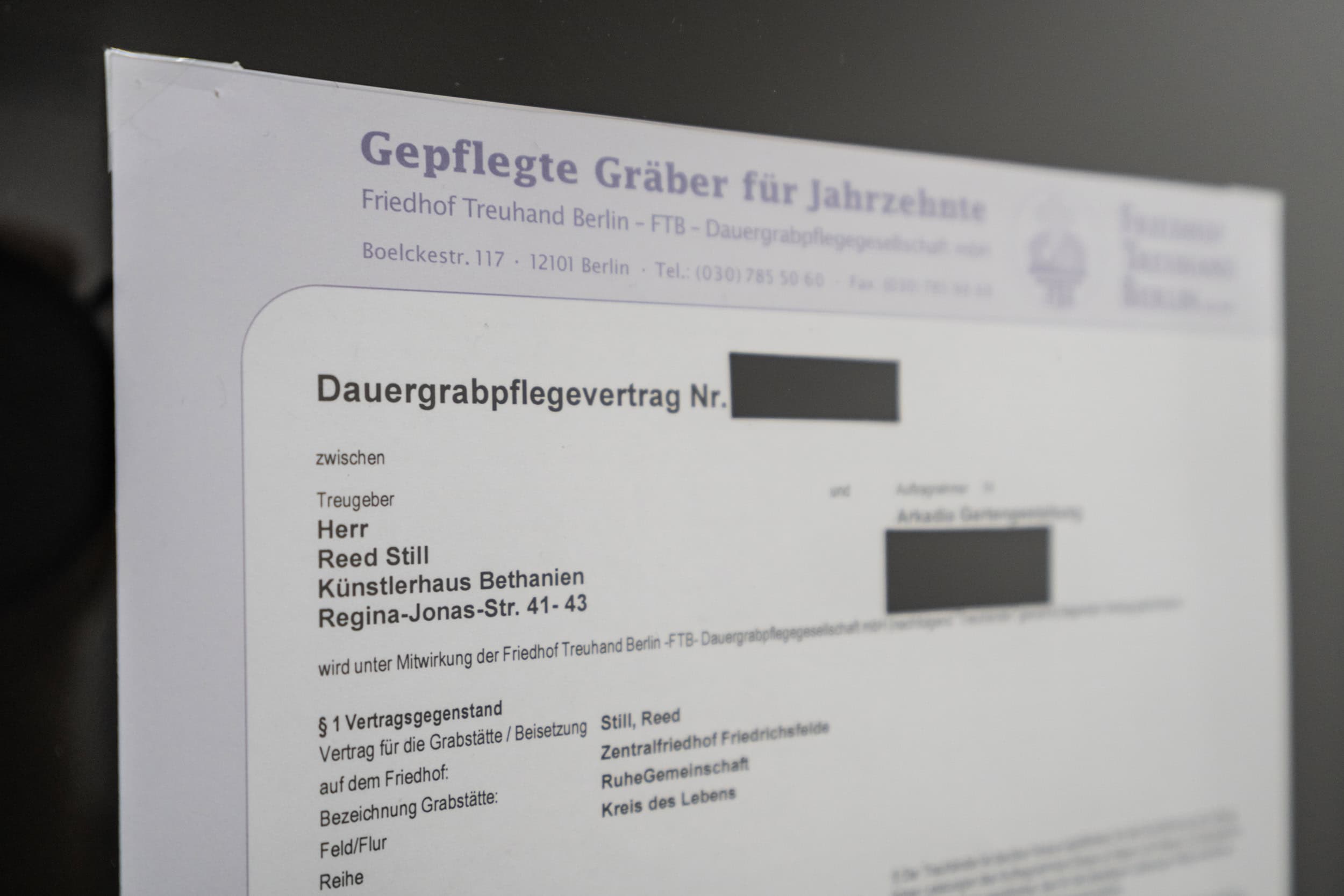
The third work, The Grave, is installed as the sole work in a smaller adjoining room and, in a sense, anticipates its deathly silence (Grabesruhe). It consists of a framed lease for a grave plot in a cemetery in eastern Berlin, which Reed Still took out in 2026 for the following twenty years. The chosen period, like the term of the sublease, corresponds to the customary duration of fixed-term rentals.
In this setup, life and death do not appear as natural processes burdened with metaphysical questions of purpose and meaning. Instead, the seemingly highly individual experience of death is organized through contractually and temporally fixed forms of access to space. The economic logic of everday life manifests itself in the concept of the lease: most people no longer own anything, but borrow, stream and rent their way through life, taking out short-term loans at every turn. The Grave extends this logic beyond life itself: even one’s final resting place is not possessed but leased, turning death into yet another temporary agreement – a kind of contractually based purgatory in perfect Bureaucratic German (Beamtendeutsch).
Comedy, as Reed Still proposes, is produced at the intersection of the economies of living and dying and, as the exhibition shows, materialized in bureaucratic language as well as object aesthetics. When every aspect of existence is already financialized and the distinction between basic necessity and transactional value collapsed long ago, an emancipatory way of artistically dealing with this reality might lie in confronting its inherent absurdity in all its existential severity.
Text: Emily Nill