Moisture Melts. Heat Dissolves
In classical Cantonese cuisine, lo foh tong (“old-fire soup”) – a long-simmered soup found across southern China and Southeast Asia – offers a sensory way into the tropicality of the Asian South. Inside the pot, slow, rolling convection gently breaks down gelatin, fat, aromatic oils and alkaloids from meat, bones, dried tangerine peel, angelica root, and other herbs and seafood, folding layers of texture and flavour into a silky, faintly sticky broth.
In miniature, this bubbling pot echoes the trade routes and atmospheric circulations that bind South, Southeast and East Asia together. Summoned by the temperature difference between the Asian landmass and the surrounding Indian Ocean, South China Sea and Pacific, the seasonal monsoon carries wind, rain and heat across the region, melting and blending flavours, cultures, beliefs and bodily experience into a sultry, soupy mix we call the tropics.
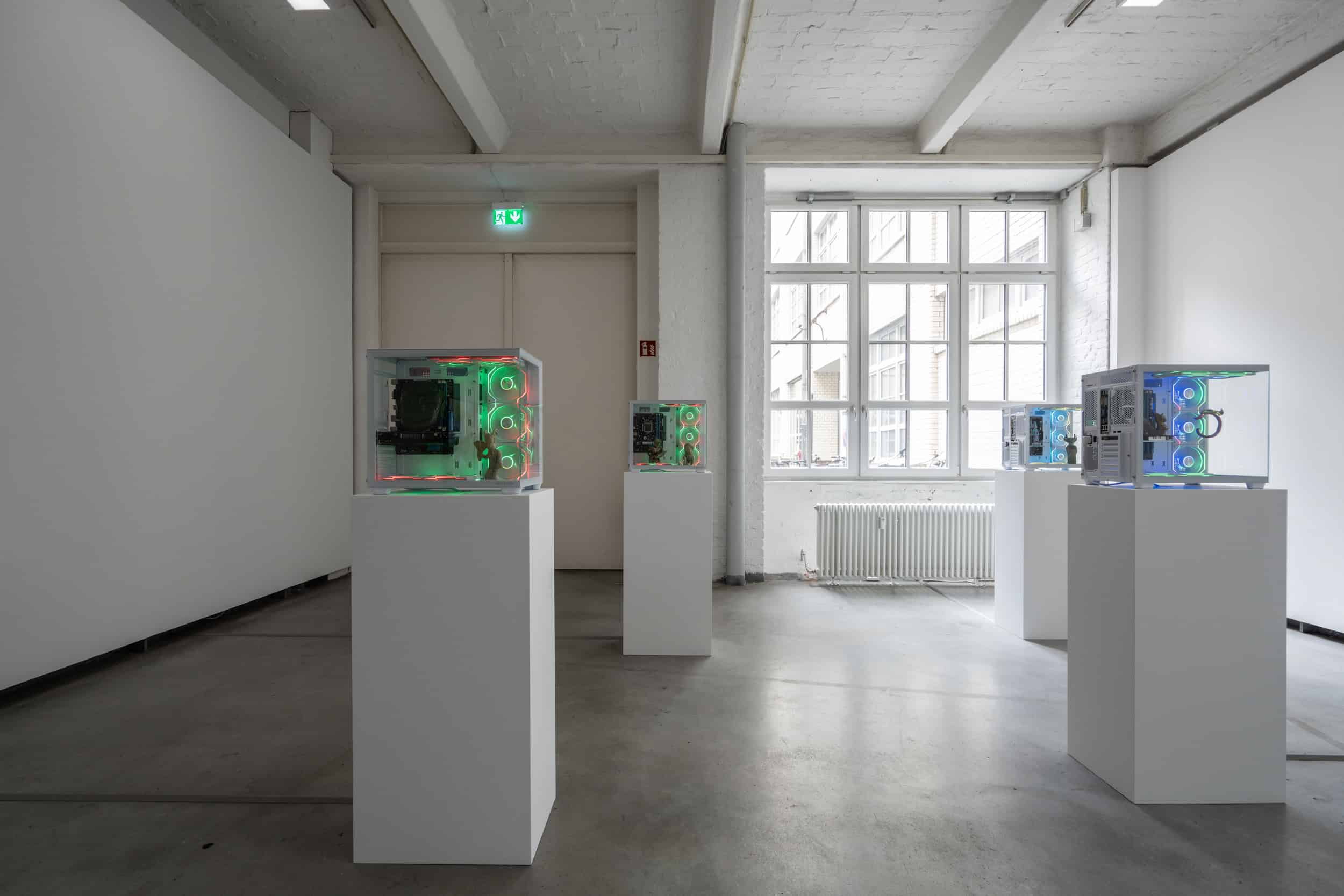
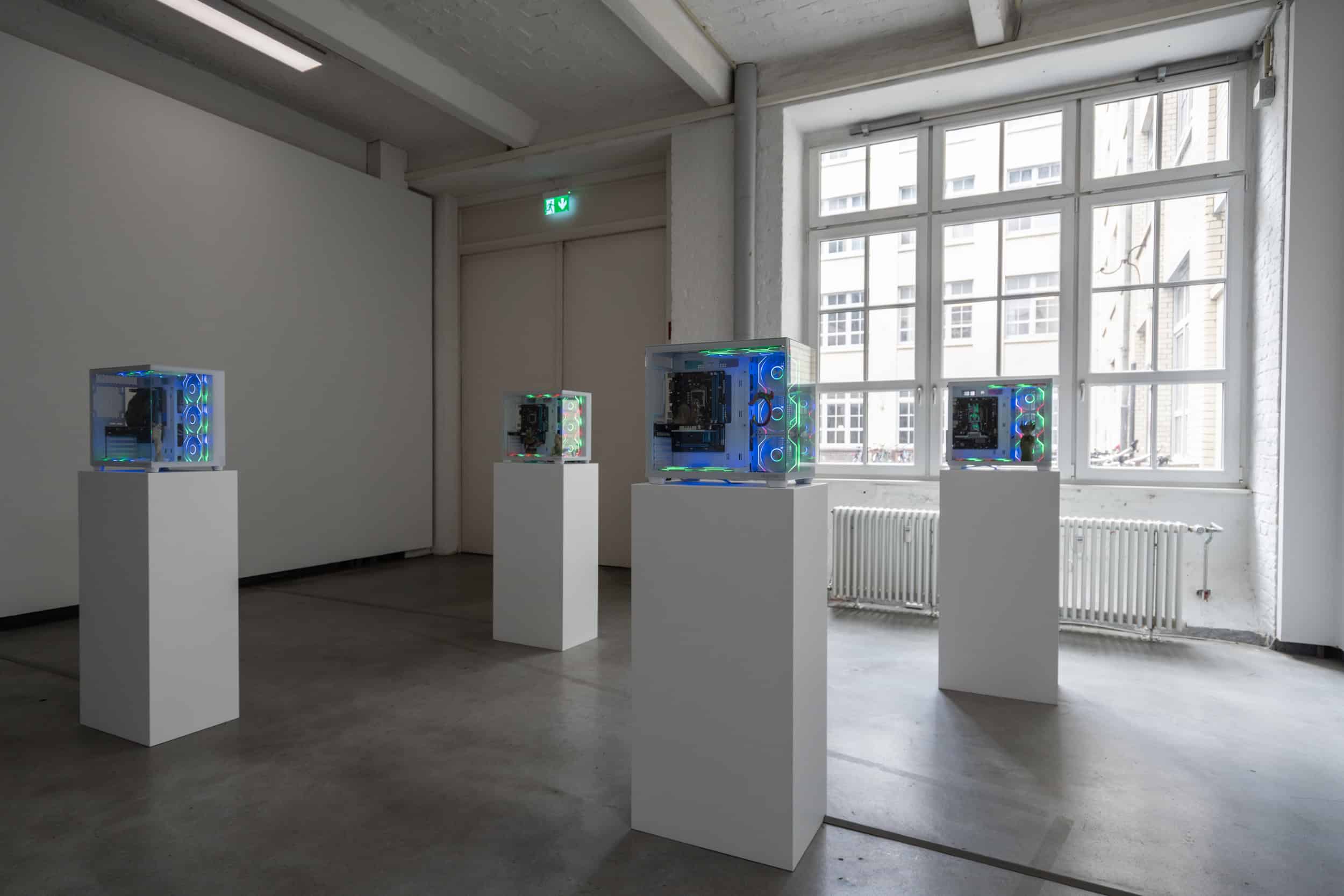
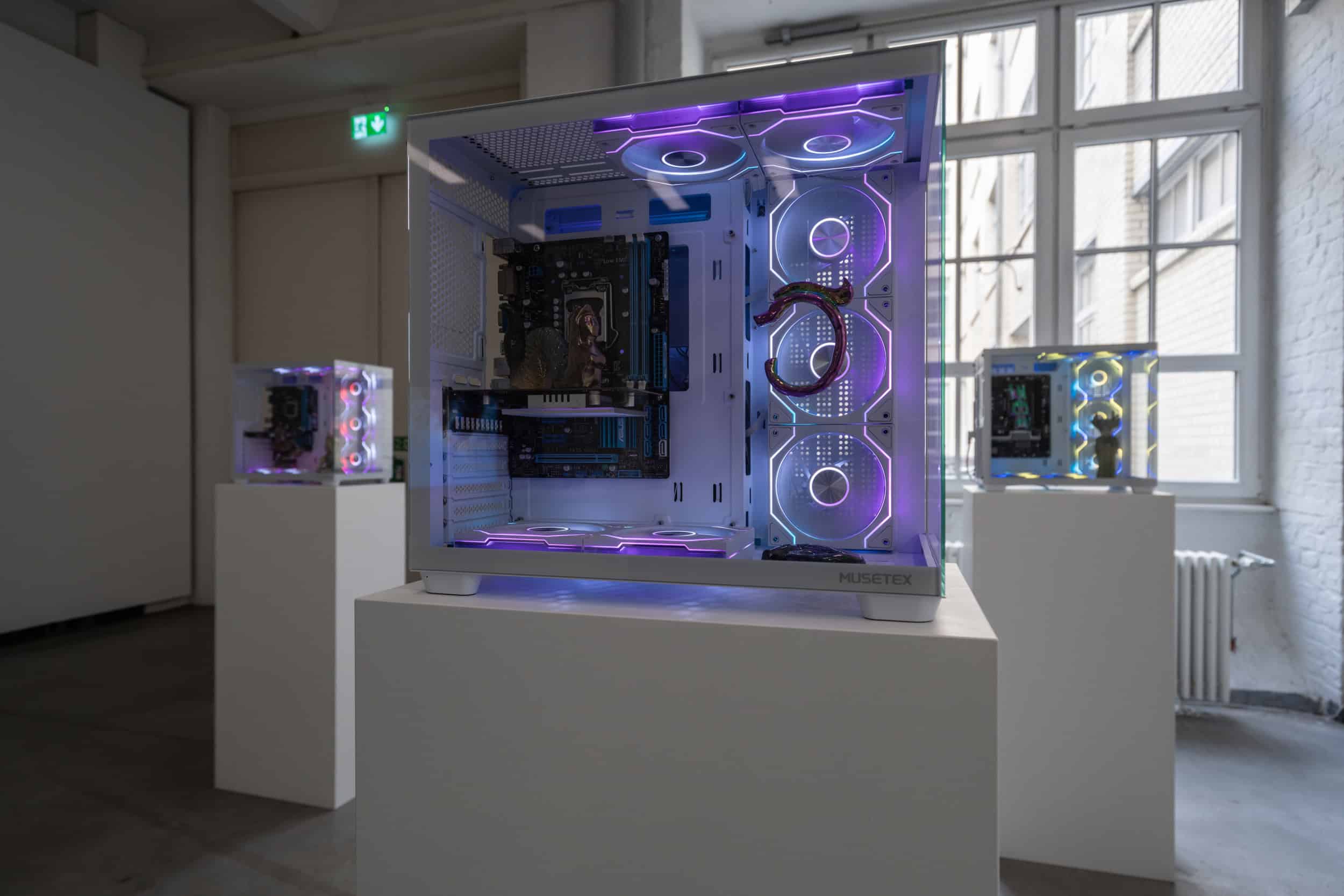
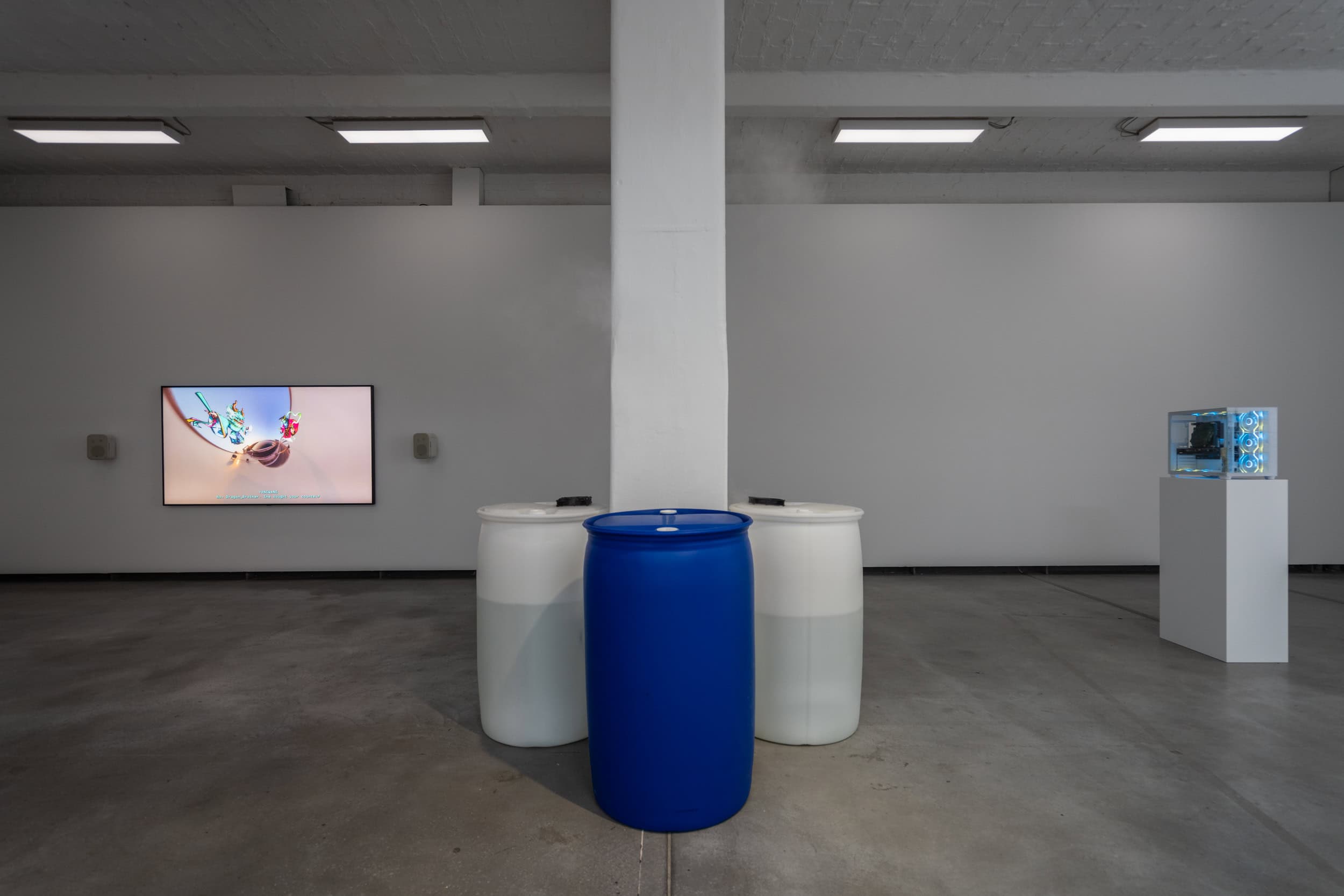
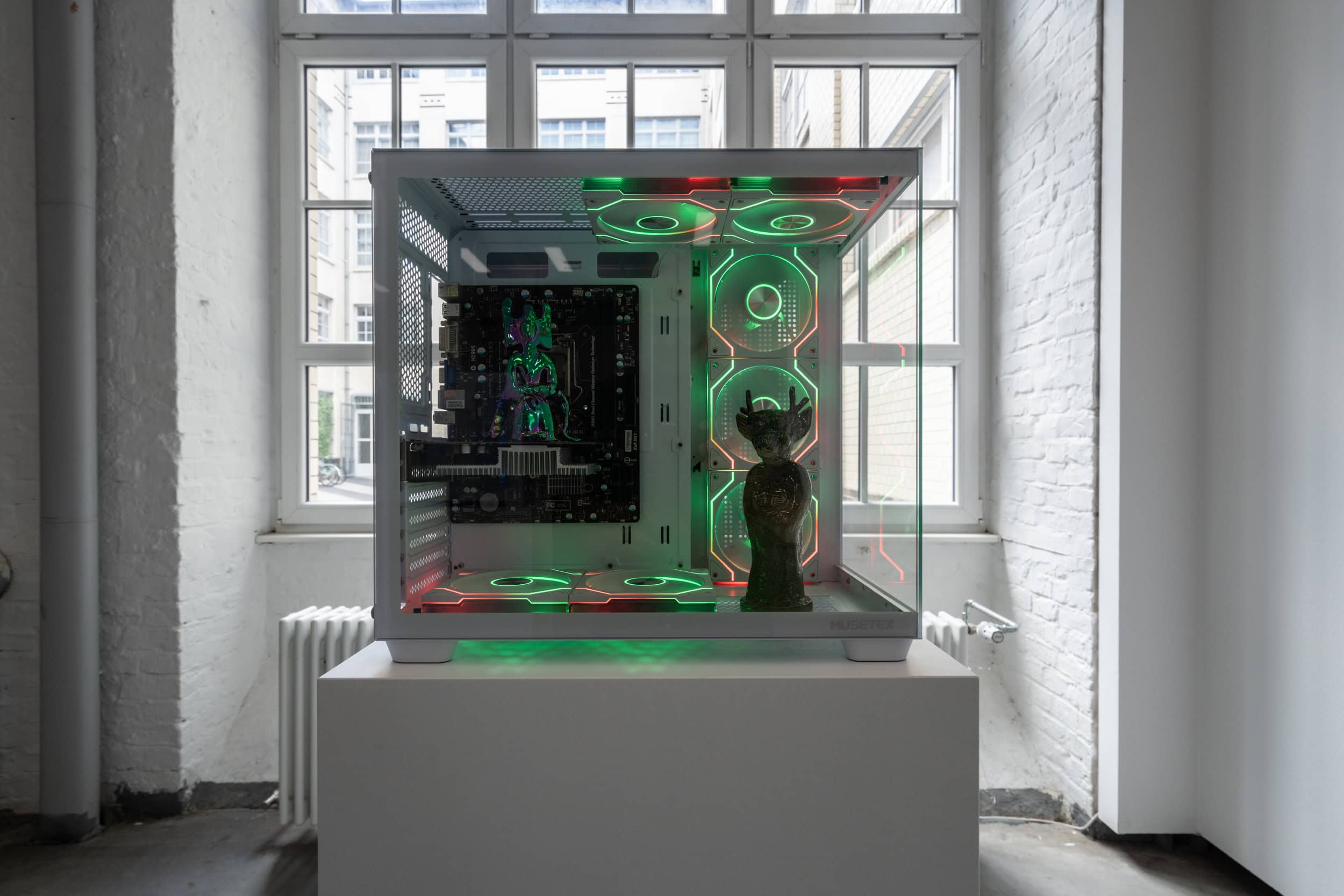
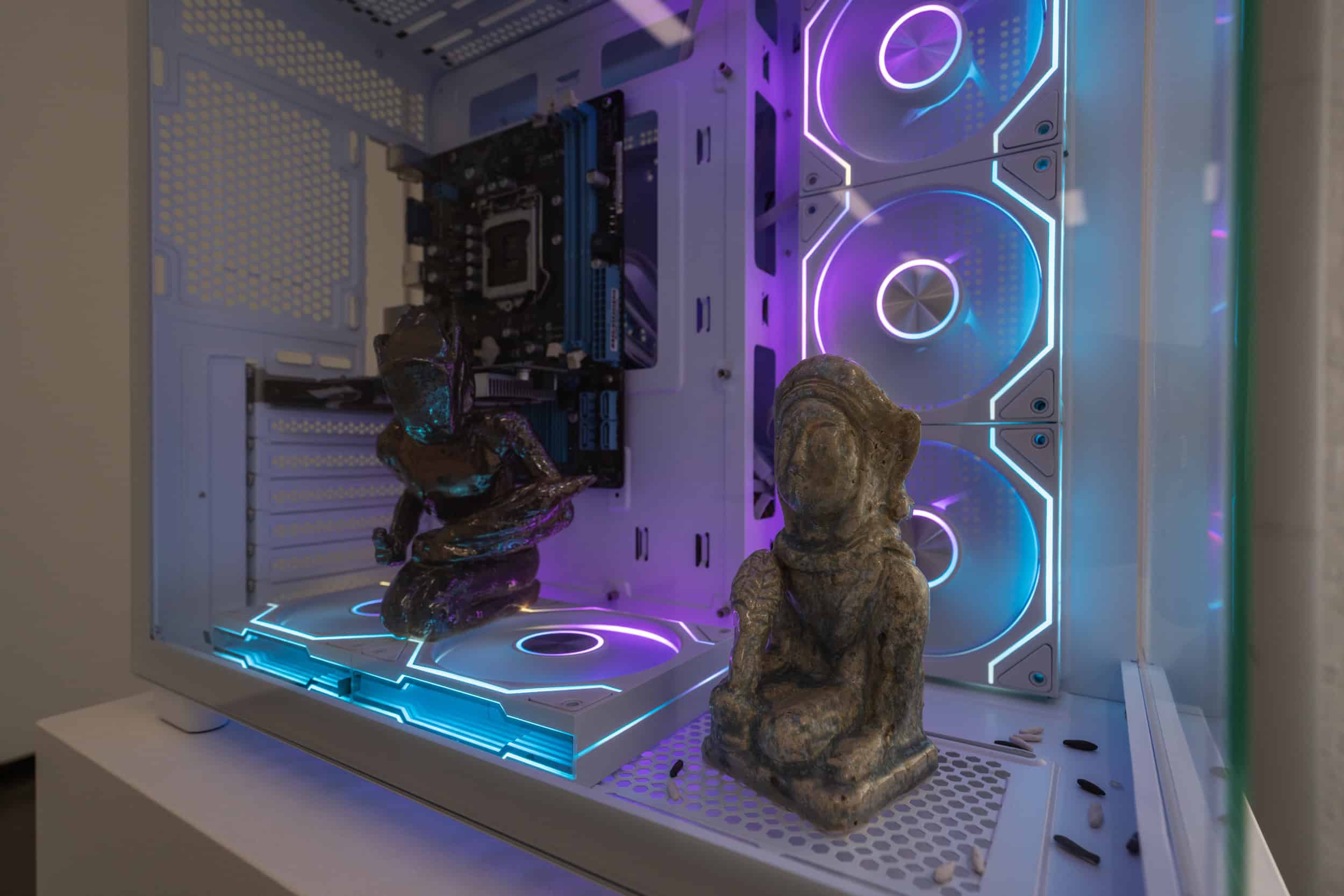
In the spirit of lo foh tong and of this tropical interpenetration of bodies and landscapes, creation and catastrophe, Kent Chan imagines a techno-animist future at the next stage of the climate crisis – one in which disorientation and confusion abound, heat and coolness coexist, control and chaos overlap, with data clouds and AI systems possessed by celestial gods that are, oddly, still sustained by terrestrial elements like minerals and water.
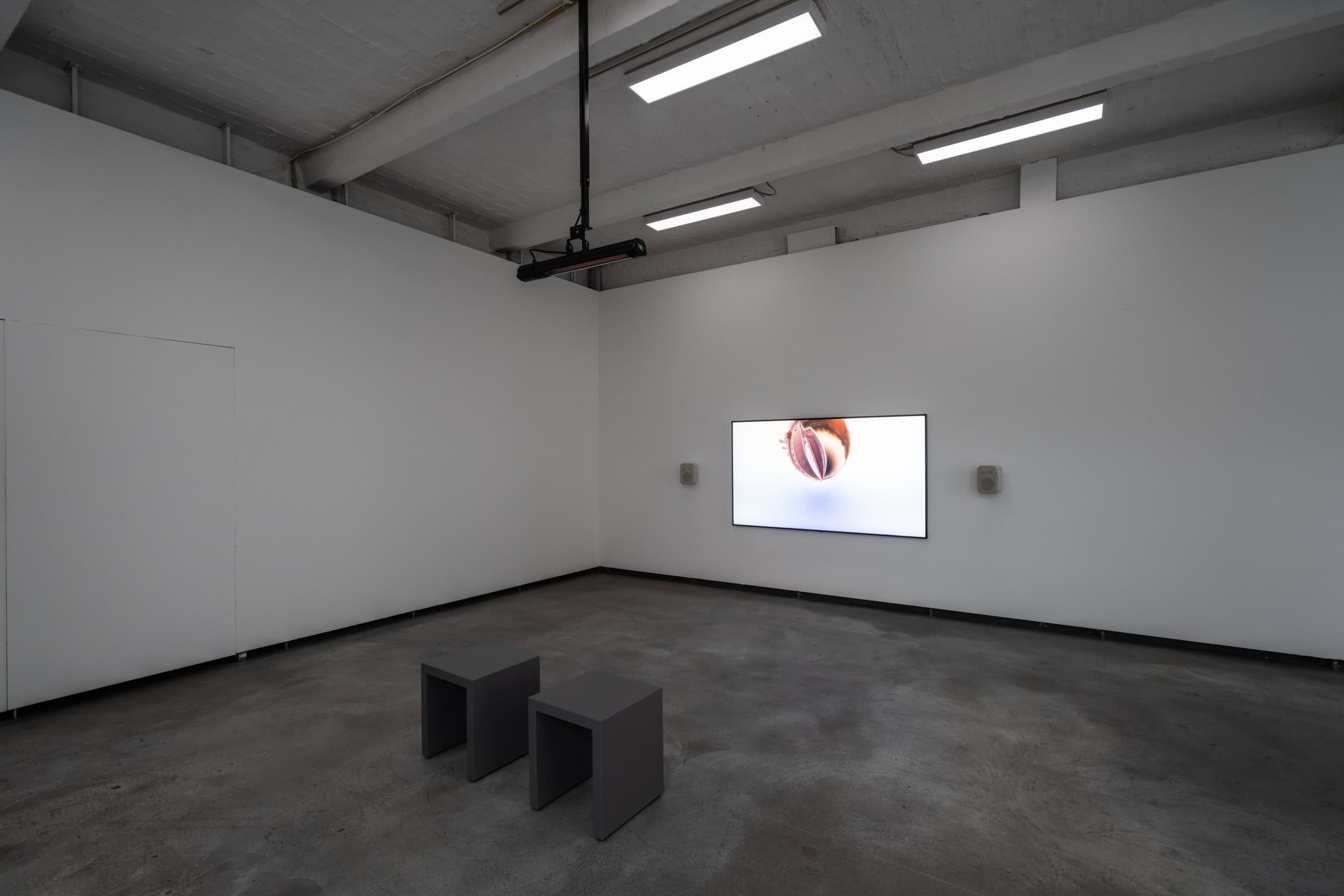
In the fictional global tropics of his video Weather Casting, traversing Yogyakarta, Chiang Rai, Yunnan, Shanghai, Beijing, the Changbai Mountains, North Hamgyong Province and Seoul through a series of fictional weather reports, Kent Chan introduces a weather-casting system that manufactures regionally desirable meteorological conditions, reminiscent of “the good old days” and free of climatic hardship. These geoengineering systems are named after political cult figures and regional deities, including Dewi Sri, Longmu, Sungke Enduri, Phaya Naga and Aoma. They argue over territory, negotiate their scope of responsibility, recall past glories, and are bewildered by their own roles as gods and tools.
Casting, here, is a deliberate act of shaping. It resonates with the logic of modernity, that is, to manage, control and intervene. But as heatwaves born in the tropics travel outward across the globe, a different strategy may already be in the air – one that is more heated, humid, humorous and humble. After all, the tropics is a place where categorization loses its grip. Here, gods are not divided by geographic or political boundary but form an amorphous whole. Like the flavours dissolving into one broth, the Naga of the Mekong and the Dragon King of the Pearl River are variations on a single ancestral form, carried and reshaped along the same routes as monsoon rain and monsoon trade.
In his speculative climate mythology, Kent Chan proposes forecasting as a method for dissolving the productivist logic of industrial modernity – the belief that anything imaginable can, and should, be produced. To forecast, as he puts it in his lecture-performance Casting Weather (2026), is to read “the cracking of bamboo, the direction of leaf fall, the appearance of insects” in order to sense the coming of “rain, drought and pest cycles”. It is not to produce but to sense and to see; to look ahead by staying grounded in the here and now.
Heat and humidity open pores, blur boundaries, carry microbes and fungi, cloud the mind, dissolve borders and forfeit control. These are the strategies of the tropics.
Adding complexity to – and departing from – the geo-economic idea of the “Global South”, Kent Chan’s climate-cultural thinking of the tropics offers no clean answer to the catastrophe of late capitalism and the global warming it has produced. Instead, the tropics is a pot of boiling, sticky questions. Rather than dredging up answers, Kent Chan embraces confusion and ambiguity.
In Weather Casting, for instance, it is hard to tell whether the 360-degree filming is an attempt to connect the atmospheric to the ground, or a comment on our obsession with omnidirectional vision – one that ultimately flattens the complex strata of human knowledge spanning meteorology and agriculture, religion and science. Likewise, it is unclear whether the conversing gods gesture towards a forgotten mystical power or an unwitting absorption of gamified language. Perhaps confusion is the point. Because to ask how to forecast in past and future tense, one first has to sit with being here and there, up and down, young and old, moist and dry, all at once.
Text: Qu Chang