It Started with a Pear is a narrative by Noé Duboutay about desire, memory and the constructed nature of gender. The starting point of the exhibition is the thirteenth-century medieval verse novel Le Roman de Silence by Heldris de Cornuälle (Heldris of Cornwall). It tells the story of a girl who is raised as a boy in order to survive socially within a patriarchal system of inheritance. The text explores questions of body, language, identity and social categorisation – themes that Noé Duboutay translates into a spatial choreography of sculpture, painting, drawing and sound.
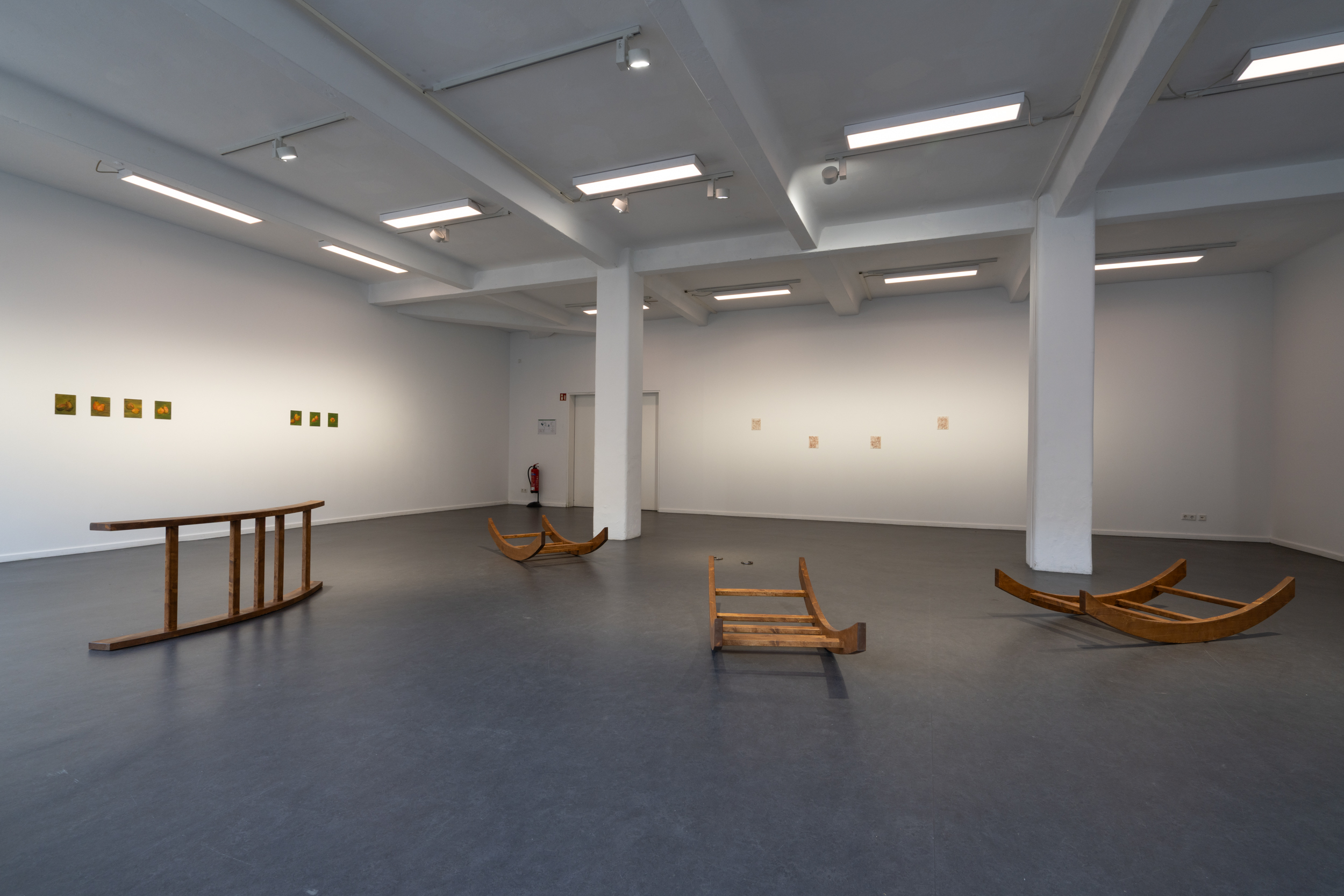
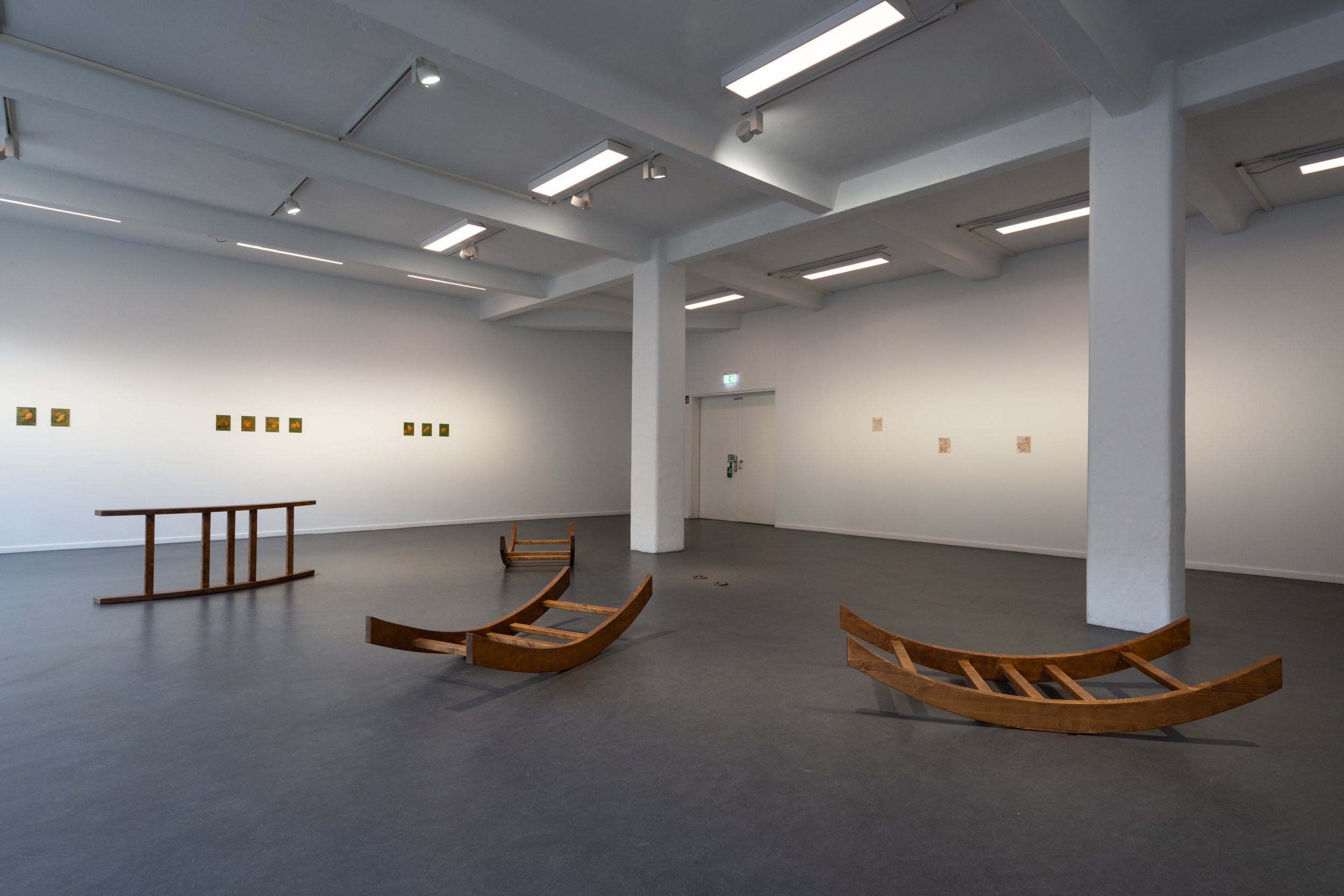
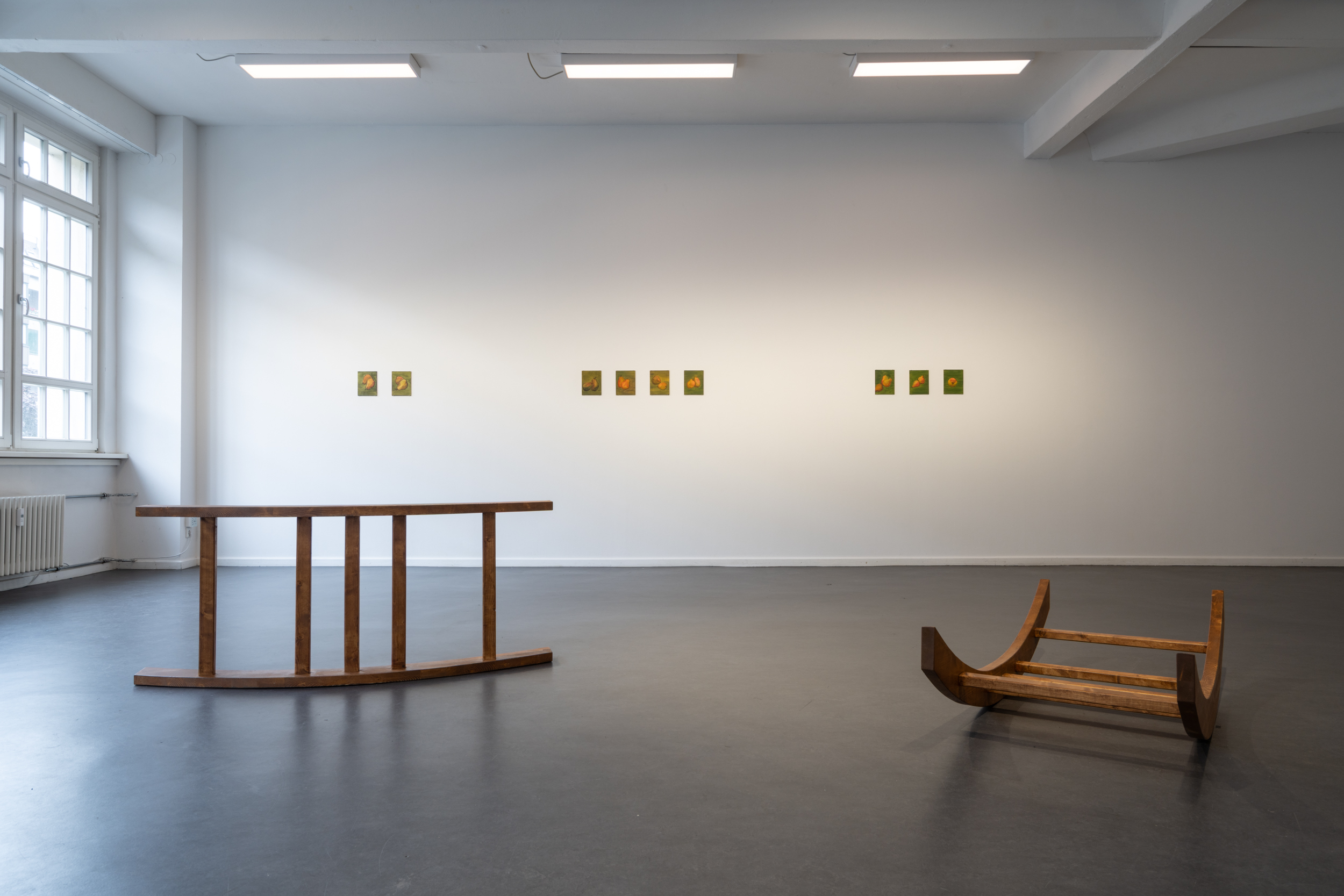
Upon entering the exhibition, visitors are greeted by four wooden constructions that immediately bring to mind the bases of rocking-horses. The rocking-horse was once a staple of many bourgeois childhoods. It simulates movement and progress, yet remains stationary. In Noé Duboutay’s work, it becomes a symbol of transition: of the young person within social gender norms and of the moment at which certain role models must be discarded. The constructions appear to be the abandoned frameworks of a childhood that can no longer be revisited.
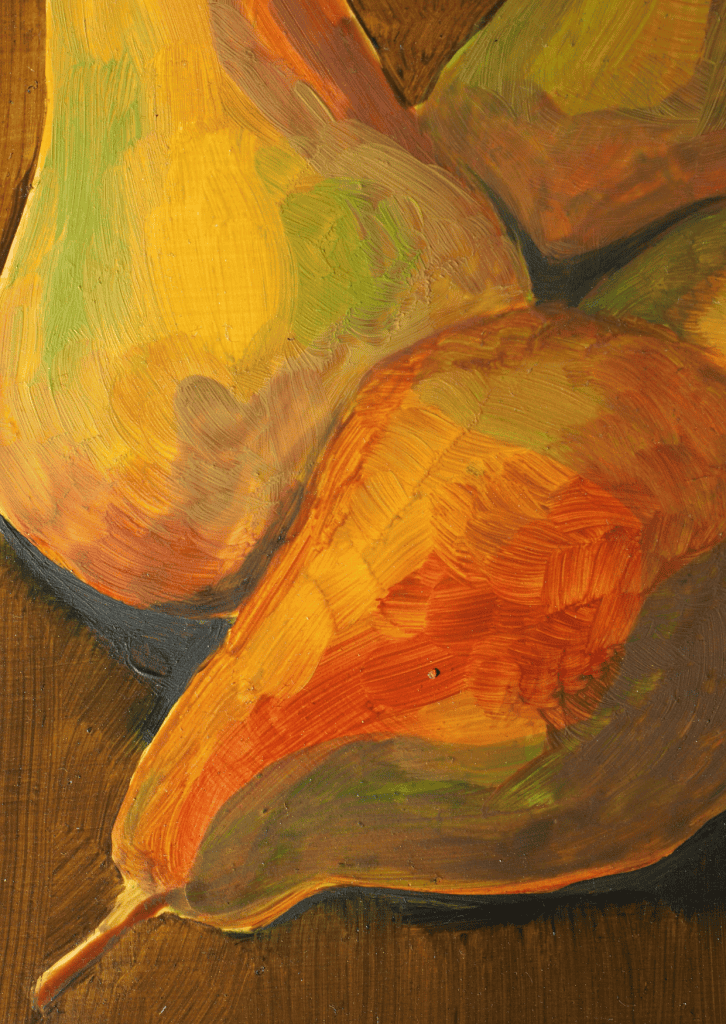
Eleven oil paintings on wood are displayed on the wall on the right. They depict pairs of pears in various constellations against an indeterminate green background. The pear functions as a complex symbol: in medieval iconography its form referred to the heart, and it was later associated with the womb, the penis or the testicles. The pear embodies ideas of love, physicality and sexual desire. As a recurring motif, it combines physical intimacy with emotional projection, and thus conveys an ambivalent sense of eroticism that allows for numerous readings.
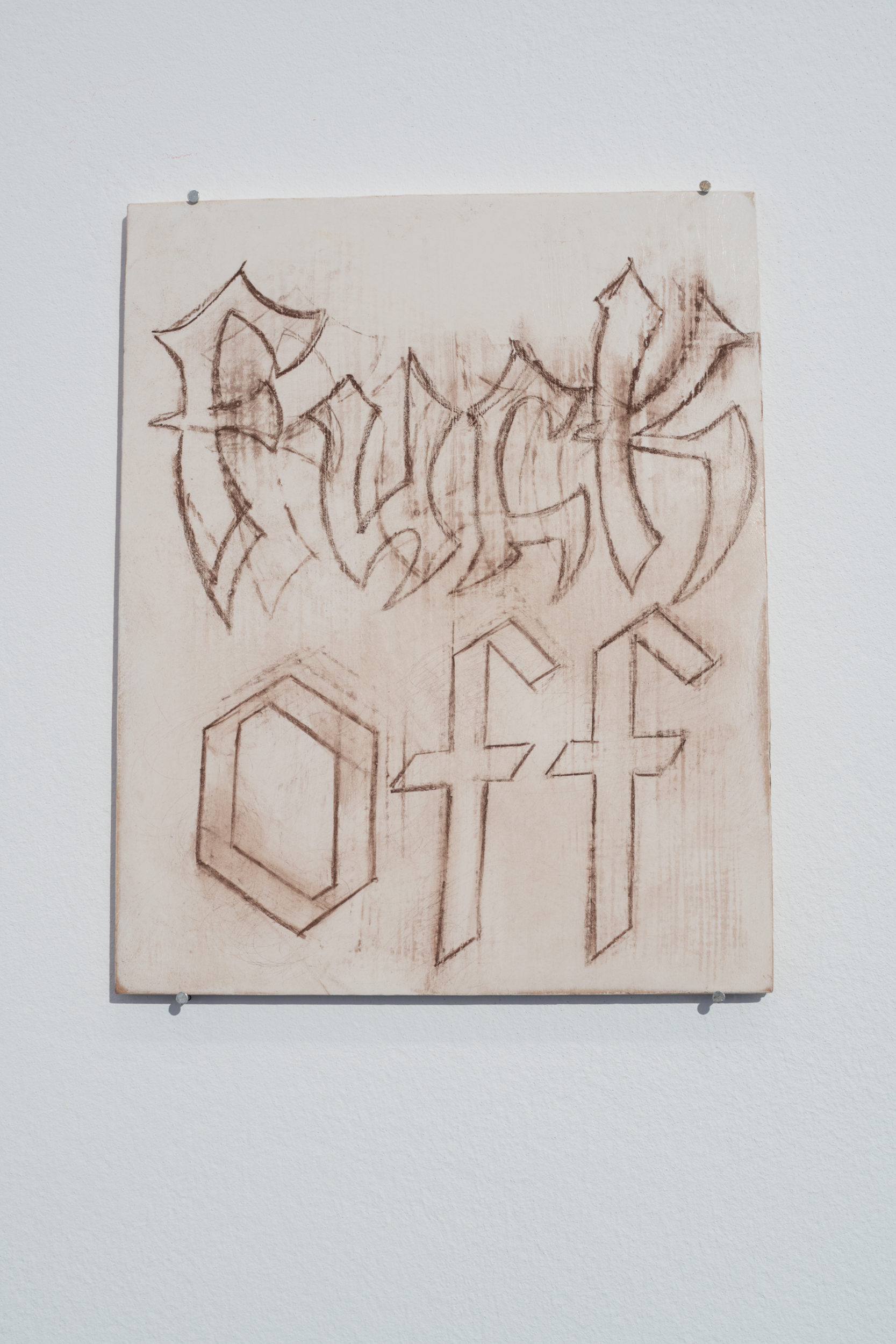
The four pastel drawings on the opposite wall display the words “fuck off”, “phantasy”, “NOSTALGIA”, and “DESIRE”. Formally, they are situated somewhere between the Tannenberg typeface and the spiky typography of heavy metal aesthetics. They result from a superimposition of various historical references, combining medieval imagery and subcultural appropriations. The works thus also raise the question of who narrates history, with what intention and in what visual form. Here, language doesn’t appear as a neutral medium, but as an ideologically informed surface.
A thirty-minute sound work created in collaboration with Caroline Beach can be heard in the space. Beginning with dungeon synth – a genre of electronic music reminiscent of early fantasy role-playing games – it densifies into increasingly darker sounds, heavy metal and distorted screams. Individual figures emerge from the sound: a girl, a horse, a knight and a pear. Their voices are based on freely interpreted passages from the Roman de Silence and blend into autofictional storylines. Rather than being illustrated, the medieval narrative is fragmented and re-embodied. Voices become animalistic, language decays, identities shift.
A performance by Noé Duboutay and Caroline Beach will activate the exhibition at various moments. The characters from the sound work – the girl, the horse and the knight – will step out of the narrative and into the actual space. This performative reading combines bodies, voices and objects with the sculptural works in the space, creating an artistic unity that questions socially determined roles and gender stereotypes, and visualizes fluid forms of identity. The past no longer appears as a closed historical space, but as material that can be repeatedly reinterpreted, reappropriated and rewritten.
Text: Maximilian Rauschenbach